

ARCHIVE
Vol. 16, No. 1
JANUARY-JUNE, 2026
Editorial Essay
Research Articles
Conference
Agrarian Novels Series
The Peasantry in 1930s–1940s Egypt: Al-Ard by al-Sharqawi
*Research Fellow, French Institute of Oriental Archaeology in Cairo (IFAO), aferrand@ifao.egnet.net
†Postdoctoral Researcher, IFAO and Center for Economic, Legal, and Social Studies and Documentation (CEDEJ)
https://doi.org/10.25003/RAS.16.01.0009
 |
Introduction
Literature plays an important role in social science studies on Egypt. This importance is explained by the self-proclaimed literary realism of certain authors, and by the difficulty of access to other – political, sociological, or economic – sources. Literature is often credited with reflecting the political events and social organisation in a country. The scholar and translator Richard Jacquemond observes that in the second half of the twentieth century, Egyptian writers and intellectuals did not merely employ literature as “politics pursued by other means,” but also took part in the production of “a form of anthropological knowledge of their societies,” since “national scholarship in the social sciences … has often been … constrained by authoritarian regimes” (Jacquemond 2015, p. 141; see also Gonzalez-Quijano 2000). Egypt specialists in many disciplines continually refer to the novelist and Nobel laureate Naguib Mahfouz (1911–2006), whose work covers most of the twentieth century. Through his Trilogy and numerous short stories, Mahfouz, known as the “Egyptian Balzac,” is sometimes depicted as a chronicler of Egypt’s national saga in the interwar period, and at other times as a quasi-journalistic chronicler of the lives of ordinary urban dwellers in 1950s and 1960s Cairo, of people who were struggling to cope with the high cost of living (Faddul 1993; Mehrez 1994; Piketty 2013; Ferrand 2023).
The tendency to turn to literature as social science is more marked in the field of peasant studies in the context of Egypt; this is primarily because of the conceptual and statistical challenges associated with documenting Egyptian social stratification and its evolution from the long nineteenth century to the aftermath of the 1952 agrarian reform (Kilpatrick 1974; Selim 2004). The earliest studies on rural Egyptians largely date from the second half of the 1940s. Of these, the most notable are Doreen Warriner’s Land and Poverty in the Middle East (prepared in 1948 for the British Ministry of Economy and War) and the first household budget survey of rural populations, The People of Sharqiya (1946), by the geographer Abbas Mustafa Ammar.
Following the agrarian reform of 1952, the Nasserist state sought to measure the effects of the reform by initiating a pilot survey on rural household budgets in the Giza governorate. The pilot survey was followed by a large-scale national survey of both rural and urban households in 1958–59, with further rounds in 1964–65 and 1974–75 (Ferrand 2026). At the same time, the first school of rural sociology was established within the sociology departments of Cairo, Alexandria, and Ain Shams universities, where a number of landmark studies were undertaken. These included Ibrahim Amir’s well-known survey, al-Ard wa-l-fillah, al-masala al-ziraiyya fi Misr (The Land and the Peasant: The Agrarian Question in Egypt, 1957), Jacques Berque’s Histoire Sociale d’un Village Egyptien (Social History of an Egyptian Village, 1957), Muhammad Atif Ghayth’s Dirasat fi ilm al-ijtima al-qarawi (Studies in Rural Sociology, 1967), and Muhammad Awdah’s al-Fillah wa-l-dawla, Dirasa fi asalib al-intaj wa-l-takwin al-ijtimai li-l-qariya al-misriyya (The Fellah and the State: A Study of the Means of Production and the Social Constitution of an Egyptian Village, 1979). Nevertheless, considerable doubt surrounded the reliability of the data produced, owing to delays in processing questionnaires, the authoritarian context, and the indicators employed.
Al-Sharqawi’s Fellahs: An Empirical Sociology of Egyptian Peasant Classes?
Abd al-Rahman al-Sharqawi (1920–87) came from a peasant family in the Munufiyya governorate, in the middle of the Nile delta. After studying law, he became a journalist and gained fame with his debut novel, Al-Ard (The Land), published in 1954 – a time when Gamal Abdel Nasser was gradually consolidating his power following the Free Officers’ coup d’état of 1952. As Robin Ostle notes in his preface to the English translation of the book, al-Sharqawi was a strong advocate of socialist ideas.
The story of Al-Ard is set in a village in the Egyptian delta, most likely in Munufiyya, in the 1930s. At that time, Egypt was experiencing an authoritarian phase alongside a political and economic crisis. Following the dismissal of several prime ministers in the late 1920s, Ismail Sidqi (d. 1950) was appointed to the position in 1930 and he “ruled Egypt with dictatorial firmness” until 1933. He established a new party, the People’s Party (Hizb al-Shab); marginalised its rivals, the Wafd and the Liberals, by dissolving parliament; and suspended the 1922 constitution (Botman 1998, p. 294). During the same years, Egyptian agriculture was hit by a severe economic crisis. “The cotton crop lost about two-thirds of its nominal value between 1931 and 1933 compared to the late 1920s,” leading to a 32 per cent decline in the total value of agricultural production and a 40 per cent decline in agricultural wages between 1928 and 1938 (Beinin 1998, p. 321).
In the 1930s, “landlords and state officials often portrayed fellahs (or fellaheen, which roughly translates to ‘peasants,’ understood as small landowners and the landless agrarian workers), as unchanging, irrational, ignorant, and criminal” (ibid.). Given the relative scarcity of studies of rural poverty before 1952, historians of modern Egypt have frequently turned to al-Sharqawi’s novel as a source documenting rural poverty of that period. Al-Ard presents the conflict between prominent figures of the village (“notables”) and small landholders over irrigation infrastructure. The impoverished inhabitants of the village find themselves deprived of half their usual water supply (reduced from 10 days to 5 days). They decide to write a petition, drafted by the schoolteacher Muhammad “Effendi” (or Mr Muhammad, a title reserved for public servants and literate persons in pre-1952 Egypt), detailing the severe consequences this water shortage would entail. Muhammad Effendi, however, fails to obtain authorisation from the omdeh (the village headman) and the local pasha. The pasha meanwhile intervenes through his nephew, Mahmoud Bey, to trick the illiterate peasants into signing a statement of approval on plans for extending a new highway that would pass by his palace, and over the lands of many small landholders. The conflict escalates until paramilitary troops come on camels and beat the peasants into submission, and peace is restored.
The novel’s success may be attributed to its condemnation of the oppression of the fellahs, who have everything to lose (Jad 1976). As is well known, setting a story in a particular time in the past is a literary technique often used to bypass censorship. Therefore, one might wonder if al-Sharqawi chose the authoritarian period of Sidqi in order to challenge the young republic of the early 1950s, which had just implemented its first agrarian reform. However, al-Sharqawi became a “cultural icon of the Nasserist regime” (Beinin 1998, p. 322): he contributed to one of its prominent propaganda journals, al-Katib (The Writer), and received the State Appreciation Award for Literature in 1974. As early as the 1960s, Al-Ard was included in secondary school literature syllabi – he was “speaking directly to our hearts,” said an Egyptian medical doctor we met, born in 1949 – and it was adapted into a film in 1969, directed by Yusif Shahin, bringing Nasser’s leitmotif of the “struggle against feudalism” on to the big screen (see Downs 1995, pp. 153–77).
Al-Sharqawi advocates for literary realism in a political voice that makes his work more representative of fiction that can be usefully analysed to understand the rural world of Egypt. In literary studies, his realism is described as committed, progressive, or new realism, which emerged as “politically engaged fiction” in the early 1950s in Egypt (Selim 2004, p. 139). From this standpoint, the novel can be understood as a work of fiction that seeks to create positive change by presenting a fictionalised but not idealised reality. Al-Sharqawi disagreed with the idealised, pastoral depictions of rural life of his predecessors, as his young narrator explains while going back to Cairo:
How I wished that my village could be a village without troubles, like the village in which Zaynab lived [from Muhammad Husayn Haykal’s novel published in 1913]. The farmers there had no troubles with their irrigation water, the government did not take their land away, nor send men in khaki to flog them with whips. The children’s eyes were not consumed by flies. In Zaynab’s village, men did not pass blood and pus in their urine, nor were they convulsed with pain which did not leave them till they were silent, finally. Yet my village was every bit as beautiful as Zaynab’s [and, contrary to Zaynab’s] had tasted the whip . . . and known the thrill of defying destiny, the foreigner, the omdeh, the government, and of winning too, at times. (al-Sharqawi 1990, p. 221)
The novel Al-Ard, whose title echoes that of Emile Zola’s novel La Terre, published in 1887 (also reviewed in this journal (vol. 9, no. 2)), displays a type of realism that refuses the romanticisation of Egyptian fellahs. The novel consists of three parts. The first part can be seen as a gateway to the rural world: it is narrated by a young boy who has just left primary school in Cairo, to spend the holidays in his village. He mocks himself and his “dreams of secondary school, of wearing long trousers and a jacket with an inside pocket, a tie which would flutter in the wind, and Oxford shoes” (al-Sharqawi 1990, p. 10). He quickly realises that the student protests shaking Cairo are only one aspect of Egypt’s crisis which confronts his own village, and which he now finds alien because he is an urban schoolboy (ibid., p. 11). Indeed, at that time, 85.9 per cent of the Egyptian population was illiterate (al-Faksh 1980, p. 48). With the new pair of glasses that have just been bought in town with his father, the boy witnesses the conflicts in his village: first, between the peasants; then, between the peasants and the local landlords.
The second part, which makes up more than two-thirds of the book, recounts the conflict over water resource management between the villagers, their headman, and the government, whose actions served the purposes of the pasha and his nephew, Mahmoud Bey. In this part, the narrator steps aside in favour of an omniscient narrative, through which each of the peasant protagonists has an opportunity to speak.
Finally, in the very short, third part of the book, the reader finds the young narrator with his eyes opened – proof that his glasses were indeed metaphorical. As he prepares to start secondary school in Cairo, he leaves behind a village scarred by struggles for the means of production.
With Samir Amin’s thinking in mind, we focus on Al-Ard’s presentation of the rural social classes in Egypt. To the historian, the novel lends itself for use as a historical source on the dynamics between these classes, and to draw on tools of literary analysis while conducting this historical reading can be rewarding. al-Sharqawi combines the omniscient point of view with extensive indirect speech to present the characters’ point of view, their position in the extremely codified rural society, and their perception of each other. This narrative technique which characterised the modern novel consists in “presenting a character’s voice partly mediated by the voice of the author” and vice versa, which eventually blurs the boundaries between the story being told and its characters’ opinion (Stevenson 1992, p. 32).
The village is characterised by a particular social organisation on which the narrative draws. Two main characters, Alwani and Khadra, occupy the lowest ranks of this society. Alwani is a young daily-wage worker from a Bedouin background. His ethno-geographical origin earns him general contempt from the villagers – rather common at that time (Gershoni and Jankowski 1986, p. 100); they only tolerate him because he guards the melon fields. In the opinion of Waseefa, daughter of the former chief guard and the main female character of the novel who is courted by all but not married by anyone, people like Alwani “sold their labour, having nothing else to offer, not owning even a scrap of soil for themselves.” This remark alludes to the basic definition of the proletariat (proles in Latin): individuals who own nothing but their labour power and their progeny. Waseefa then throws it in his face (in direct speech): “Those who have no soil, have nothing, not even honour!” (al-Sharqawi 1990, p. 32).
The second character, Khadra, can be seen as Alwani’s female counterpart: a poor girl who serves food to the men in the fields and lives with anyone who provides for her, who occupies both the social margins of the village and its very centre. She spreads rumours and acts as an intermediary between men and women. Violently murdered in the novel, she disappears and no one tries to solve the mystery of her murder. “Alwani and Khadra were of the same kind, both should consort together. Both lived in the village without property or family,” summarises Abdul Hadi (ibid., p. 39).
Abdul Hadi is perhaps the most compelling figure in the novel with regard to rural stratification, since he stands precisely at the boundary – long debated in Egyptian social science – between the rural poor (landless peasants) and the intermediate strata of village society. For Hadi, “the land was his own life and his own history” (al-Sharqawi 1990, p. 40, emphasis added), explains the omniscient narrator in the type of mixed discourse characteristic of the second part of the novel. He possessed an acre, i.e. a single feddan (0.42 hectare), inherited from his father, which corresponds to what Samir Amin calls “une exploitation naine,” a small-scale farm (Riad 1964, p. 10).
All the different characters in the novel, including the headman or omdeh, belong to the class of small landowners (those owning less than five feddans). This class constituted 93.1 per cent of landowners, owning 31.6 per cent of agricultural land across Egypt in 1930 (Abdel-Malek 1962, p. 188). In comparison, owners of five to 50 feddans (6.3 per cent of landowners) possessed over 29.7 per cent of the country’s agricultural land, and the remainder (approximately 38.7 per cent of land) was concentrated in the hands of 0.6 per cent of landowners (those holding more than 50 feddans). More specifically, Anouar Abdel-Malek, an Egyptian sociologist who became a French citizen in the 1960s, distinguishes within this group,
the fellahs, who own less than two feddans and are therefore unable to support themselves [i.e. all the characters excluding the omdeh]; and the actual landowners, who own between two and five feddans and can provide for their material needs. (Abdel-Malek 1962, p. 190)
The identification of rural social classes based on land ownership was a matter of controversy among Egyptian sociologists in the 1950s and 1960s, largely due to the agrarian reform initiated in 1952 (Ferrand 2026). According to Samir Amin, the line between the “popular masses” and the “intermediate classes” was 1 feddan: those who owned less than 1 feddan comprised the poor with an average annual income of 3 to 6 EGP (Egyptian pound) per capita; those who owned between 2 to 5 feddans were the intermediate class with an income of around 25 EGP per capita per year. Owners of more than 5 feddans were “privileged landowners,” according to Amin, a term that he defended thus: “they eat their fill, remain numerically very few and permanently employ agricultural labourers” (Riad 1964, pp. 10–11; IEDES 1961, pp. 185–87).
Amidst the extreme poverty shared by most fellahs at the time, Abdul Hadi’s status could be considered enviable, as he himself acknowledged:
An acre . . . a separate acre: it gave him a special standing in the village. Not only in the village: when he visited the town, he could sit with his uncle in the Armenian cafi (sic.), with the omdeh, with all the notables. An acre . . . how many people in the village owned as much? Even the omdeh did not own more. (al-Sharqawi 1990, p. 40)
The omdeh indeed owned only 1 feddan, but managed to consolidate his family’s assets into a 10-feddan farm so that he could qualify for the position of headman, which highlights the intertwining of private property and socio-political status in rural Egypt. Abdul Hadi, the typical small landholder, commands respect and attention from all; he also possesses his own waterwheel. The combination of ownership of land, however modest, and possession of agrarian technology, at a time when others rely merely on digging small canals from the main one, confers upon Hadi a distinctive and privileged status among the village’s small landholders. It is a status of which he is acutely conscious and in which he takes pride, especially in contrast to those who are not involved in agricultural labour. He despises the effendis, Muhammad Effendi the teacher especially – having “his feet deep in the earth . . . was better than living as an effendi in the city!” (al-Sharqawi 1990, p. 41) – and merchants. When Shaykh Shinawi, the imam of the mosque of the village, says that the cutting-off of the water is divine punishment, Abdul Hadi mutters:
Perhaps if the Sheikh himself owned some land, perhaps if he had mixed his sweat with the earth, and perhaps if he had seen the tender maize shoots wilting like dying children, perhaps then he would have understood, and stayed silent. Even if he owned the merest vegetable patch, and had dug this with his hoe, and had sown it with seeds, perhaps then he would not have equated the action of the government with the wrath of God. But the Sheikh was not a farmer. He was, with his preaching, more like a man who had something to sell, and provided he could sell it, let the earth perish with thirst! People with land sat in the full glare of the sun … people like the Sheikh and Kadra were in the shade. (Ibid., p. 65)
The novel, in fact, delineates a gradual hierarchy among its characters according to their position within the village – or, one might say, their closeness to the land. Following Alwani and Khadra, both entirely dependent on the employment provided within the village, and Abdul Hadi, the archetypal smallholder, there is the rural–urban fringe of this peasant world, inhabited by those who pursue education – for instance, the schoolteacher Muhammad Effendi. A counterpart of Abdul Hadi, he represents the emerging educated stratum in the Egyptian countryside, which lies halfway, as it were, between rural and urban society. Although he owns land and works hard on it, and on the land of others too, he is seen as an outsider by the rest of the village: he is educated, sometimes reads the newspapers, and displays a certain vanity by wearing “a spotless galabeyya [a traditional, loose-fitting, ankle-length robe or gown]” and “the strongest-smelling scents,” as well as a tarboosh (a cylindrical felt cap worn by effendis) whenever he goes to the town (ibid., pp. 119–20). Above all, he is the “one man in the village who earns four pounds a month” (ibid., p. 88). To his brother Diab,
Muhammad Effendi was everything in life: ability, the power that came from money and wealth that was the product of knowledge. He was the future and all that gives pride to the spirit of a man. (Ibid., p. 106)
Interestingly, however, these effendis are marginalised in the plot: the young narrator and his brothers are more interested in the student protests in Cairo than in the peasant struggle. Muhammad Effendi fails to get his petition signed, and is accused of being useless:
But you too in this village can play your part . . . if only you have courage, you too can defy the oppressor. After all, who are the people fighting our corrupt regime and their foreign supporters? The students and the railway workers, people like that. Don’t you read the newspapers, don’t you know what’s going on in Egypt? (Ibid., p. 160)
Al-Sharqawi’s gradation of the rural hierarchy unfolds in precisely the opposite manner to how literature typically represents the rural world, with effendis and socio-economic elites relegated to the background (Gasper 2009, pp. 108–47). The highest level, and that which gradually recedes in the narrative, is represented by the bey – whose role is narrated from the point of view of the small landholders.
Mahmoud Bey is a rich young landowner who possesses 30 acres, and the nephew of a rich and powerful pasha who owns an unspecified but much bigger area of land. Through this character, the author presents the landed nobility, their corruption, and their abuse of power in the context of the 1930s. Mahmoud Bey suffers a potential loss of his land over debts, but it is returned to him thanks to his uncle’s connections to the Sedqi cabinet (1930–33) (al-Sharqawi, p. 43). Through this character, contrasted with small landowners like Abdul Hadi, we come to know more about the social formation of the village. Unlike other villages where most of the peasants work as tenants on the lands of the big landholders, here, as Abdul Hadi says, the fellaheen work their own lands, even if they are but fragments of an acre, since only 10 people in the village own an acre.
Mahmoud Bey, in this context, is a powerful figure. He is a corrupt broker who passes his uncle’s plans of extending a highway to his palace by running the highway over most of the lands belonging to the smallholders. At the same time, given his political connections, the small landholders also look up to him as a way to make their voices heard in Cairo, in their appeal to increase the cruelly rationed irrigation water. He and his uncle, the pasha, are the government personified as far as the peasants are concerned (ibid.).
What are some of the insights the novel provides on the classes of rural society, and their relation to those who are powerful as well as to the world of national politics in the pre-1952 land reform period, through the character of Mahmoud Bey?
By way of an answer, we can look at two characters already mentioned above: Alwani and Muhammad Effendi. Alwani, the landless labourer, used to work for the bey at some point, taking his sheep to the market. He remembers those days with fondness. Since the bey’s attention was not exclusively on his farm, Alwani managed to embezzle money by claiming that some of the sheep had been lost on the way to or back from the market, and he would make a lot of money by selling those sheep. That Alwani got a low wage for this job goes without saying; this is also implicit in a conversation he has with Abdul Hadi about the bey (al-Sharqawi 1990, pp. 43–5). One is not sure here if Alwani’s thefts from the bey should be read as representative of passive adaptation strategies of the proletariat, or as a cultural trait the author associates with bedouins in agrarian delta societies.
The encounter between Muhammad Effendi and Mahmoud Bey – the literate schoolteacher and the rich landowner – is central to the novel, and through it the bey’s corrupt character (typical of the class of large landowners) unfolds. When the government’s irrigation inspectors tell the villagers that their access to water for 10 days a month is to be reduced by half, they gather outside Abu Sweilim’s house (former security officer of the omdeh and a community leader) to think of a response. They know that this decision was likely made to serve the interests of the pasha, Mahmoud Bey’s uncle, who had recently bought a large plot of land. They decide to continue irrigating their lands for 10 days as usual and ignore the government’s orders, but Muhammad Effendi – regardless of the strong connection between the bey and the pasha that they all know about – trusts that the bey will help them by getting their petition (which he suggests writing at that instant) to the Minister of Public Works, who was Mahmoud Bey’s friend (al-Sharqawi 1990, pp. 58–9). The villagers agree, since this attempt at a solution does not contradict their decision to carry on their irrigation as usual.
Across the remaining second part of the novel, we learn more about the corrupt bey, but always from the point of view of the smallholders and never through dialogue involving the bey. He is alienated from the peasants’ world, even while holding tremendous power over it and plenty of room for manipulation. Muhammad Effendi seems to have a naive faith in education as a potent weapon in the complicated and corrupt world of politics that threatens the water resources available to the peasants. He thinks that the fact that he is educated makes him worthy of representing the peasants, and places him on a higher footing than the mass of small landholders in relation to the bey. He writes the petition in ornamental classic Arabic and reads it out twice to the men gathered at Abu Sweilim’s. He then visits the bey in his big house and accompanies him to Cairo, after collecting some money from the villagers to give as compensation to the bey for his intervention in delivering their grievances about water to the Cairo politicians. Meanwhile, Mahmoud Bey plots with the omdeh and the imam of the mosque to deceive the illiterate peasants into signing a declaration of approval of the new highway – which would result in a takeover of some of their lands – reaching his uncle’s palace, claiming that it was an alternative petition for water.
Overall, through the interactions between Mahmoud Bey and the peasants, that are mostly portrayed through the character of the schoolteacher and small landholder Muhammad Effendi, al-Sharqawi offers important insights into the world of Egypt’s peasantry before the land reform of 1952. First, as Samir Amin notes with regard to how Egyptian novelists of the 1950s did not include characters of flesh and blood from among the landless in their writing, Al-Ard presents a delta village populated by small landholders with just two landless and vulnerable characters. The social injustices the village faces – the central subject of the novel – are aimed at the small landholders. Second, the novel presents political corruption as the main reason for the plight of the peasants; structural injustices such as access to land and the distribution of wealth are less prominent. The bey is a swindler who deceives the peasants into collecting small sums of money as bribes and fees for him, in return for services and interventions in the capital that actually harm their interests. He works for an absent – from the land and from the novel – pasha, his uncle, who we assume is even more connected to the corrupt politics of land, and who uses these connections to serve his own land while ruining the lands of the smallholders.
Conclusion
The diverse cast of characters in Al-Ard affords the reader a glimpse into rural existence where social status hinges on corn yields – that is, the extent of land operated – or vulnerability to water shortages. As we look at this diverse cast, we see that unlike many Egyptian novels in which, in Samir Amin’s words, the majority of the rural population acts as “a kind of backdrop” (Riad 1964, p. 23), al-Sharqawi’s novel attempts to bring this “backdrop” to the fore, pushing the effendi, the omdeh, and the pasha, Cairo and the educated, into the background. But, Amin writes, whereas the landless masses were usually replaced by small landowners in the novels he examined, al-Sharqawi presents a village where small landowners are the majority; peasants and the village community lead the narration and marginalise the elite, but the landless too remain relatively marginal in the narrative. Ultimately, however, the work remains a landmark in depicting rural Egyptian society. It advances upon its predecessors by partially but sharply linking class divisions and dynamics to pre-1952 political corruption, agrarian policies affecting small landowners, and the varying vulnerability of peasants to water shortages.
As such, the novel builds a rural world in which small landowners face injustice in the distribution of water and the potential loss of their land, caused by the local, politically connected landed elite. In this depiction, al-Sharqawi’s realism seems somewhat arbitrary, as it overlooks the more historically accurate reality of life in a mid-twentieth-century Egyptian delta village – a world in which the landed elite owned vast tracts of land and exercised sweeping control over the lives of the peasants who worked them, many of whom were landless or sharecroppers. We know very little, for example, of the many landless peasants who must have been working on the land of the pasha and his nephew, the corrupt bey. The small landowners are sometimes friendly towards the few landless peasants depicted in the novel, but they also look down on them because they do not own land; the novel does not expose forms of exploitation between the small farmers and the landless. Yet al-Sharqawi masterfully captures the intensity of the conflicts among the small landowners themselves as they face their collective ordeals.
In this context, the narrative foregrounds the fragile yet enduring cohesion and resilience of the community of smallholders. The last scene perhaps would illustrate this. The water restrictions enforced by the irrigation authority make it necessary for impoverished labourers, employed on land belonging to others, to divert the flow of water away from the canal in which Abdul Hadi’s waterwheel is situated. This leads to a fight: “In a surge of violent feelings to protect the land and give it water, the villagers set upon each other, beating and being beaten without thought or care.” But this fierce conflict over resources abruptly stops when the life of a buffalo is endangered. The loss of the animal, caught in the canal, “had united them all; a calamity like this fell on them all equally, and they must all confront it, standing side by side” (al-Sharqawi 1990, p. 224).
References
| Abdel-Malek, A. (1962), “La question agraire en Égypte et la réforme de 1952,” [“The Agrarian Question in Egypt and the 1952 Reform”], Revue Tiers Monde, vol. 3, no. 9–10, pp. 181–216.
| |
| Al-Faksh, M. (1980), “The Consequences of the Introduction and Spread of Modern Education: Education and National Integration in Egypt,” Middle Eastern Studies, vol. 16, no. 2, pp. 42–55.
| |
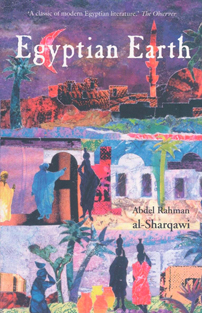
| Al-Sharqawi, A. (1990/1954), Egyptian Earth, Desmond Stewart (trans.), University of Texas Press, Austin; first published in 1954.
| |
| Amir, I. (1957), Al-Ard wa-l-fillah, al-masala al-ziraiyya fi Misr [Al-Ard and the Peasant: The Agrarian Question in Egypt], al-Dar al-misriyya li-l-nashr, Cairo.
| |
| Awdah, M. (1979), Al-Fillah wa-l-dawla: Dirasa fi asalib al-intaj wa-l-takwin al-ijtimai li-l-qariya al-misriyya [The Peasant and the State: A Study of Modes of Production and the Social Formation of the Egyptian Village], Dar al-Thaqafa, Cairo
| |
| Beinin, J. (1998), “Egypt: Society and Economy, 1923–1952,” in M. W. Daly (ed.), The Cambridge History of Modern Egypt, Volume II: From 1517 to the End of the Twentieth Century, Cambridge University Press, Cambridge, pp. 309–32.
| |
| Berque, J. (1957), Histoire sociale d’un village égyptien au XXème siècle [Social History of an Egyptian Village in the Twentieth Century], Maisonneuve & Larose, Paris.
| |
| Botman, S. (1998), “The Liberal Age 1923–1952,” in M. W. Daly (ed.), The Cambridge History of Modern Egypt, Volume II: From 1517 to the End of the Twentieth Century, Cambridge University Press, Cambridge, pp. 285–308.
| |
| Downs, S. (1995), “Egyptian Earth Between the Pen and the Camera: Youssef Chahine’s Adaptation of Abd al-Rahman al-Sharqawi’s al-Ard,” Journal of Comparative Poetics, vol. 15, pp. 153–77.
| |
| Durelles, Y. (1960), “Structure et développement de l’économie égyptienne,” [Structure and Development of the Egyptian Economy], Économie et Politique, vol. 72, pp. 36–53.
| |
| Faddul, A. (1993), Mushkilat al-tabaqa al-wusta al-misriyya fi qissas Najib Mahfuz min “Al-Qahira al-jadida” ila “al-tulatiyya [The Problem of the Egyptian Middle Class in the Stories of Naguib Mahfuz from Heliopolis to The Trilogy], Dar al-Hamra, Beirut.
| |
| Ferrand, A. (2023), “L’éventail des (milieux) possibles Le discours littéraire comme source historique, par l’exemple des classes moyennes nassériennes chez Naǧīb Maḥfūẓ (années 1960),” [“The Range of Possible Milieus: Literary Discourse as a Historical Source, Using the Example of Nasserist Middle Classes in Naguib Mahfuz in the 1960s”], paper presented at SELICMA Seminar, Paris, Mar. 21.
| |
| Ferrand, A. (2026), L’Égypte de Nasser: classes moyennes et idéal socialiste (1952–1970) [Nasser’s Egypt: Middle Classes and the Socialist Ideal (1952–1970)], Presses Universitaires de France, Paris.
| |
| Gasper, M. E. (2009), “Five Peasant Characters in Search of Bourgeois Identity or Afandis in Gallabiyas,” in The Power of Representation: Publics, Peasants, and Islam in Egypt, Stanford University Press, Stanford, pp. 108–47.
| |
| Gershoni, I., and Jankowski, J. (1986), Egypt, Islam and the Arabs: The Search for Egyptian Nationhood, 1900–1930, Oxford University Press, Oxford.
| |
| Ghayth, M. A. (1967), Dirasat fi ilm al-ijtima al-qarawi [Studies in Rural Sociology], Dar al-Nahda al-arabiyya li-l-ṭibaa wa-l-nashr wa-l-tawzi, Cairo.
| |
| Gonzalez-Quijano, Y. (2000), Les Gens du livre: Champ intellectuel et édition dans l’Égypte républicaine: 1952–1993 [People of the Book: Intellectual Field and Publishing in Republican Egypt, 1952–1993], CNRS Editions, Paris.
| |
| Ḥaykal, M. H. (1913), Zaynab, Cairo.
| |
| IEDES Study Group (1961), “La Société Urbaine Égyptienne” [“Egyptian Urban Society”], Revue Tiers Monde [Third World Review], April–June, pp. 183–210.
| |
| Jacquemond, R. (2015), “Un mai 68 arabe?” [“An Arab May 1968?”], Revue des mondes musulmans et de la Méditerranée, vol. 138, pp. 131–46.
| |
| Jad, A. B. (1976), “Abd ar-Rahman ash-Sharqawi’s ‘Al-Ard’,” Journal of Arabic Literature, vol. 7, pp. 88–100.
| |
| Kilpatrick, H. (1974), The Modern Egyptian Novel: A Study in Social Criticism, Ithaca Press, London.
| |
| Mehrez, S. (1994), Egyptian Writers Between History and Fiction: Essays on Nagib Mahfuz, Sun Allah Ibrahim, Gamal al-Gitani, The American University in Cairo Press, Cairo.
| |
| Piketty, T. (2013), Le Capital au XXIe siècle [Capital in the Twenty-First Century], Éditions Points Seuil, Paris.
| |
| Riad, H. (1964), L’Égypte nassérienne [Nasser’s Egypt], Les Éditions de Minuit, Paris.
| |
| Selim, S. (2004), The Novel and the Rural Imaginary in Egypt, 1880–1985, Routledge/Curzon, New York.
| |
| Stevenson, R. (1992), Modernist Fiction, University of Kentucky Press, Lexington.
|
