

CURRENT ISSUE
Vol. 16, No. 2
JULY-DECEMBER, 2026
Research Articles
Research Notes and Statistics
Obituary
Book Review
Poverty Alleviation Trajectory of Southeast Asia in the Context of Rural Development: A Review
Ruchira Bhattacharya*
*Assistant Professor, National Institute of Rural Development and Panchayati Raj, ruchirab@nird.gov.in
Abstract: Despite decades of decline in global poverty, poverty alleviation continues to be a critical challenge, with data indicating that over 831 million people were living in extreme poverty, that is, below USD 3 per day, in 2025. This review analyses poverty reduction trajectories in Southeast Asia, which experienced a faster poverty decline than other developing regions. It focuses on rural development and social protection policies in Thailand, Indonesia, Viet Nam, and Malaysia. The article employs a multi-stage literature review of 259 peer-reviewed studies, synthesising the key publications, with the analysis centred on policies on rural development, poverty, social protection, micro-credit, and agriculture in the four countries. Thailand and Malaysia exemplified mature welfare models, blending universal schemes and cash transfers with support for farmers and informal workers. Indonesia pursued a hybrid approach with conditional cash transfers, community-driven initiatives, and digital integration. Viet Nam emphasised geographically targeted programmes for new rural development and sustainable poverty reduction, prioritising infrastructure, and livelihood diversification. The review concludes that countries that experienced sustainable poverty alleviation utilised an adaptive mix of commercial development of primary sectors by means of global integration and comprehensive social protection, combining universal and targeted measures, grounded in inclusive rural development, investment in the demographic dividend, protection of employment through insurance, pensions, and basic income.
Keywords: Poverty alleviation, rural development, social protection, Southeast Asia, conditional cash transfers, agricultural development, bibliometric analysis, rural poverty reduction, inclusive development
Introduction
With 831 million people living under USD 3 per day and 18.3 per cent of the global population living in acute multidimensional poverty in 2025, poverty is still one of the world’s most pressing development challenges. While the proportion of people living in poverty has declined, extreme poverty is more rigid – creating multi-dimensional vulnerabilities and being more resistant to policies (UNDP 2025; World Bank 2024).
The East Asia and Pacific (EAP) region presents an interesting example of poverty eradication. Starting from poverty levels higher than Sub-Saharan Africa between 1990–92, it declined below global poverty levels by 2007 (5 per cent) – 13 years ahead of neighbouring South Asia (World Bank 2025a). Within this region, Southeast Asia stood out as it faced extreme financial stress after the Asian financial crisis of the 1990s, exposing the limitations of growth-led policies during shocks (Cook and Cook 2003). This analysis concentrated on four Southeast Asian countries – Thailand, Viet Nam, Malaysia, and Indonesia – where poverty rose marginally during the Asian financial crisis but later saw sharp decline largely through state-led social protection frameworks.
The Asian financial crisis also coincided with an expanded understanding of social protection globally in the 1990s, from pensions and safety nets to comprehensive policy frameworks to address systemic inequality and marginalisation (Ananta 2012; Barrientos and Hulme 2009).
This paper reviews the poverty alleviation trajectory and social protection policies of selected Southeast Asian countries which had economic structures and vulnerabilities similar to South Asia, with the aim to gain cross-cutting insights on social protection policies and rural development and derive lessons for global policies on poverty eradication.
Background
Poverty Trends in East Asia and Pacific in a Global Context
The percentage of the poor showed a sharp decline globally – from around 43 per cent in 1990 to 10 per cent in 2024 (World Bank 2025a). In terms of poverty head count ratio, the East Asia and Pacific (EAP) region showed the sharpest decline, indicating greater success in moving people above the poverty line compared to South Asian countries (Figure 1).
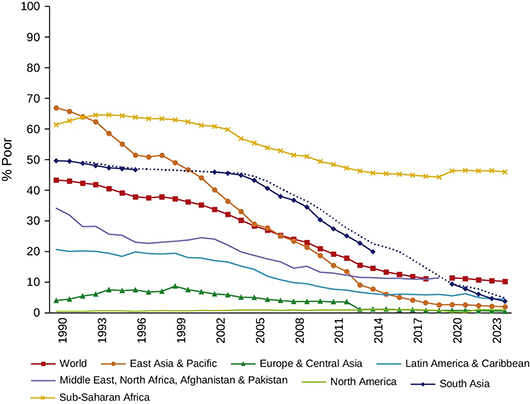
Figure 1 Global poverty headcount ratio at USD 3 per day 2021 purchasing power parity (PPP), by region, 1990–2023 in per cent
Source: Graph by author based on World Bank data (World Bank 2025a).
Narrowing the Focus: Southeast Asia Poverty Trends
Poverty rates in Thailand exhibited a steady decline though they remained above the global average; poverty rates in in Viet Nam and Indonesia fell below the global average in 2005 and 2018 respectively (Figure 2).
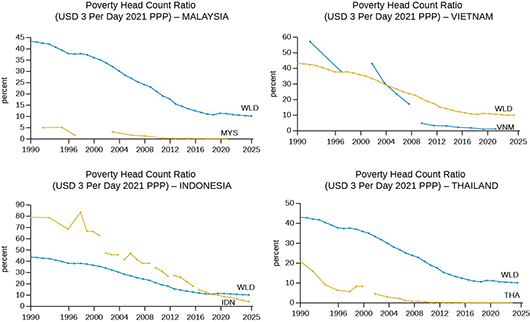
Figure 2 Poverty head count ratio at USD 3 per day 2021 PPP, Malaysia, Viet Nam, Indonesia, and Thailand, 1990–2025 in percentage
Source: World Bank (2025a).
Development indicators for these four Southeast Asian countries reveal varied economic performance and social outcomes (Table 1). Malaysia led in per capita income. Income inequality was generally low (Gini 0.31–0.36), except in Malaysia (0.41). Despite having the lowest per capita income, Viet Nam achieved the highest GDP growth at 7.1 per cent, outpacing the other three countries. Poverty rates were low compared to global and South Asian averages, though national outcomes varied: Thailand virtually eliminated extreme poverty at the USD 3 per day line with a Multidimensional Poverty Index (MPI) of 0.12 per cent, while Indonesia recorded extreme poverty at 5.44 per cent (total population 283 million) and an MPI of 5.68 per cent. Crucially, all four nations demonstrated pro-poor growth, with consumption among the bottom 40 per cent outpacing or catching up with the national averages, suggesting an inclusive economic expansion. The social sector spending of the four selected countries varied. Government’s expenditure on education was highest in Malaysia (3.5 per cent), followed by Viet Nam (2.9 per cent). Thailand had the highest domestic health expenditure (3.5 per cent), followed by Viet Nam (2 per cent). Indonesia’s health and education expenditure were lowest among the four countries.
Table 1 Profiles of selected countries, various years in millions, USD, and per cent
| Indicators | Indonesia 2024 | Malaysia 2021 | Thailand 2023 | Viet Nam 2022 |
| Population (millions) | 283.49 | 35.56* | 71.67* | 100.99* |
| Gini coefficient | 0.34 | 0.41 | 0.33 | 0.36 |
| GDP growth (in per cent) | 5.03 | 5.1* | 2.5* | 7.1* |
| Gross National Income per capita (PPP, in USD) | 4910 | 11650* | 7100* | 4490* |
| Poverty ratio (USD 3 per day) (in per cent) | 5.44 | 0.01 | 0 | 1.6 |
| Poverty ratio (national estimate) (in per cent) | 9 | - | 5.4 | 4.2 |
| Multidimensional Poverty Index (MPI) (in per cent) | 5.68 | 0.31 | 0.09* | 1.9 |
| Annualised growth of per capita income (in per cent) | 1.87 | 3.06 | 1.91 | 2.78 |
| Annualised growth of per capita consumption of bottom 40 per cent (in per cent) | 2.72 | 3.22 | 3.49 | 2.61 |
| Government expenditure on education, total (per cent of GDP) | 1.3** | 3.5** | 2.5 | 2.9 |
| Domestic general government health expenditure (per cent of GDP) | 1.45** | 1.98** | 3.53 | 2.02** |
Note: The year denotes the most recent date for which data was available for each country.
* 2024; ** 2023.
Source: World Bank (2025b).
The overall configuration of economic performance positioned Malaysia and Thailand as upper-middle-income countries approaching high-income status, while Indonesia and Viet Nam remained in the earlier stages of their development trajectory, though Viet Nam showed a robust momentum of growth. These countries’ policy frameworks and social protection programmes offer an opportunity to learn about the different approaches taken to surpass global and regional average in economic performance, build resilience against idiosyncratic shocks, and sustain the pace of poverty reduction.
Review Design and Methodology
The structured, multi-stage literature search for this review involved a comprehensive shortlisting of relevant literature from the Scopus database, using a search string specifying exclusion and inclusion criteria (available on request); this yielded 259 articles on Southeast Asia, further shortlisted into studies explicitly on poverty alleviation, rural development, social protection, and policy interventions in the selected countries, after full-text readings.
Finally, the author-supplied keywords and index terms were analysed in Biblioshiny in R to identify thematic areas relevant to the discussion and to note their temporal trends showing changing priorities and practices.
The identified thematic areas were further studied with an expanded literature search of peer-reviewed sources, reports, and policy briefs. The key social protection policies were identified and tabulated for a comparative analysis across the four countries.
Review Results
Changing Policy Focus in Literature on Southeast Asian Countries
The major research themes were mapped into four quadrants: motor themes (most frequently used, form the core subject of the articles, central to the discourse: rural development, poverty, and agriculture), niche themes (well-developed concepts, less central: climate change, community resilience, etc.), basic themes (underdeveloped in terms of conceptualisation and centrality: land reform, microfinance, and livelihoods, etc.), and emerging/declining themes (less developed, less central themes: income inequality, social protection, etc.) (Figure 3). The temporally resilient themes were food security, poverty, agrarian transition, and land reform (Figure 4).
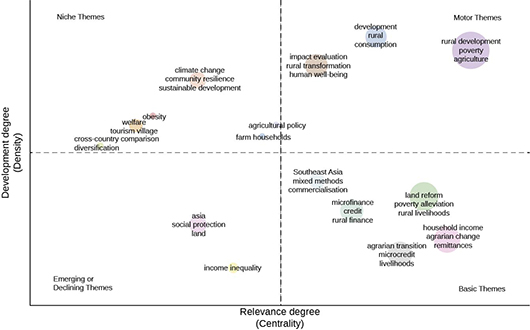
Figure 3 Thematic representation of keywords used by the author for the literature search on poverty alleviation policies in Southeast Asian countries, by importance
Note: Here is what is represented by the quadrants – top right: motor themes, i.e. most frequently used and central argument of the paper; top left: niche themes: well-developed concepts, less central to the paper; bottom right: basic themes: underdeveloped in conceptualisation but central to the papers; bottom left: emerging/declining themes: less developed and not central themes of the papers. The bubbles represent specific themes, and their size represent the size of the literature.
Base list of references is available on request.
Source: Author’s creation using Biblioshiny in R.
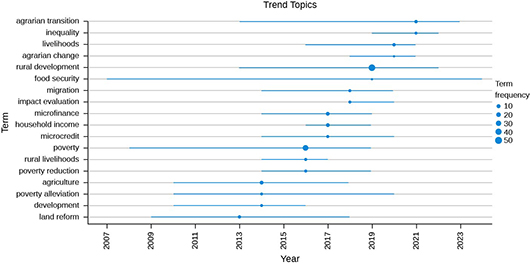
Figure 4 Relevance of the topics based on frequency of use of term in the shortlisted articles, 2007–23
Note: Base list of references is available on request.
Source: Author’s creation using Biblioshiny in R.
This review was structured into the thematic areas classified as motor, and temporally relevant: poverty alleviation, agrarian and food security policy/transformations, rural development, and social protection programmes.
Summary of Reviewed Sources
The review of literature demonstrated that Southeast Asian countries adopted diverse but increasingly integrated social protection frameworks combining welfare assistance, rural development, employment support, healthcare, and agricultural policies (Figure 5) (see Appendix Table 1). Institutional designs varied, but the programmes broadly reflected a shift towards multidimensional approaches to poverty reduction and rural resilience. Universal or near-universal elements coexisted with a range of targeted programmes in the larger economies.
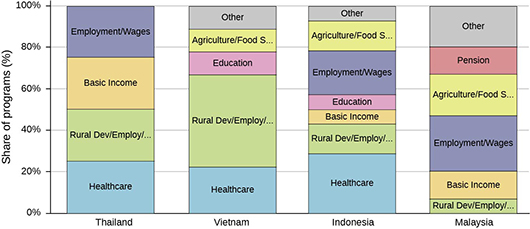
Figure 5 Sectoral distribution of reviewed programmes and their shares, Thailand, Viet Nam, Indonesia, and Malaysia in per cent
Note: AI tool used for visualisation.
Source: Presentation of Appendix Table 1.
Agrarian and Food Security Policies for Economic Stability
Southeast Asian countries showed rapid structural change with a consistent movement of the workforce out of agriculture, a shift to more diversified cropping patterns and mechanisation, alongside a rising number of small landholdings. While there were common features across the four selected countries, policy approaches were distinguishable. These countries faced a major financial crisis in the late 1990s, followed by a bailout from international financial institutions accompanied by structural adjustment (Bello 1999; Chung 2021; Filardo et al. 2009). Economic and social protection policies focussed on protection from external shocks and sustaining domestic demand while gaining from the demographic dividend through health and education policies. All countries witnessed a decline in rural population.
Thailand was at the core of the 1997 financial crisis, facing major political-economic shocks which manifested in a collapsed currency, structural reform, and subsequent government changes. The country expanded its welfare policies, especially in the agriculture sector. This included a policy push for contract farming and a multi-pronged social protection approach, including unemployment benefits, universal health coverage, non-contributory pension, and a village fund for rural development and livelihood. The agricultural sector, however, faced deep-rooted challenges, with smallholder farmers continuing to face indebtedness and poverty (Amornkitvikai and Charoenrat 2025).
Unlike its neighbours (Thailand and Indonesia), Malaysia did not take an IMF bailout and rather responded to the financial crisis with fiscal expansion to create domestic demand. The ground for this resilience was created over the decades through strong land resettlement policies under the Federal Land Development Authority (FELDA) scheme, which helped eradicate poverty among smallholders (Barau and Said 2016; Ngah and Kamarudin 2025). FELDA’s extensive land allocation and rural resettlement was implemented from 1956 onwards – which continued after the independence of Malaysia, matured over the decades, and expanded into international agribusiness venture. Its success could be attributed to Malaysia’s stable democratic governance system since independence and continuity in its pro-poor goals (Barau and Said 2016). But, over time, growing agribusiness transformed the model from land redistribution to corporatisation: some plantations were privatised, agribusiness companies created, and palm oil replaced rubber as the major crop. FELDA settlers continued to remain a significant political coalition, garnered support and resources for farmers, and offered extensive price protection for agricultural commodities.
In Indonesia, the financial crisis impacted the GDP and increased unemployment, followed by major socio-economic upheaval. This led to new social protection policy and price protection to ensure a stable rice supply, manage national stockpiles, and support local paddy farmers. However, over time, fiscal limitations, supply distortion, and pressure from producers led to a shift towards targeted subsidies (e.g., vouchers). In the plantation sector, fiscal decentralisation made the district state actors powerful in providing support for palm oil production, leading to district level variations in impact (McCarthy, Gillespie, and Zen 2012). Indonesia extended price protection such as statutory minimum Government Purchase Price through their state-owned food logistics agency, BULOG. Indonesia also extended cash transfers in the health and education sectors, even though its GDP share for education and health remained lower than in the other three countries (Table 1). These social protection programmes replaced the energy subsidy over time.
Viet Nam, although not at the core of the financial crisis, had relatively high rates of rural poverty and a large agrarian sector, posing a challenge for extended social protection. Viet Nam expanded rural credit to boost non-farm income and supported transitions from subsistence to commercial agriculture, increasing cash income while limiting price control policies.
The post-war land reforms in Viet Nam in the 1980s nationalised land and encouraged cooperatives – which did not incentivise private investments by farmers in their farms (Phát 2023). Viet Nam’s transition was defined by a shift from a command economy to a market-oriented one through the doi moi agrarian reforms of 1987 and 1988 (Walder and Nguyen 2008). Doi moi reforms enabled the transition to commercial farming and allowed farmers to profit (Phát 2023). Viet Nam’s agricultural labour share remained high (at 65–70 per cent) until the early 2000s. When subsequent reforms lifted price controls, accelerating the movement of workers into other sectors, the agricultural employment share fell to roughly 40 per cent by 2016.
Thailand and Indonesia retained their agricultural employment shares at roughly 30 per cent or more. These countries also strengthened their non-farm sector to absorb the labour shifting out of agriculture. They experienced increasing labour productivity in agriculture and protected wages through timely diversification into non-precarious, non-farm sectors for skilled and semi-skilled labour, pushing industrial growth, and providing rural infrastructure for the growth of off-farm sectors (Cherdchuchai and Otsuka 2006; Vos 2018).
With structural change, the countries transitioned from subsistence to commercial agriculture which improved welfare for smallholder farmers. For example, in Vietnam, following the market-oriented land reforms introduced under the 1993 Land Law, landlessness was increasing as households sold off their land – either to transition into non-farm work, or due to emergencies such as health expenditure or unpaid mortgages (Marsh and MacAulay 2003; Ravallion 2008). Commercial agriculture and food processing industries helped provide livelihood to the landless households and even increased household assets, such as in the case of shrimp aquaculture (capital-intensive) in Viet Nam (Gorman 2022). By 2009–10, Indonesia, Malaysia, and Viet Nam strengthened their food processing industries which acted as major employers. Thailand’s systemic push towards contract farming was supported by state-owned financial institutions such as Bank of Agriculture and Agricultural Co-operatives (BAAC) and marketing initiatives such as the One Tambon One Product (OTOP) to foster rural industrialisation, and increase community income by supporting productive business activities (Muslim et al. 2020).
Indonesia focussed on improving the Relative Rate of Assistance (RRA) by building infrastructure and providing targeted support for agricultural development across all regions. These input-side interventions were complemented by significant market price support for key commodities and also intense public research (OECD 2023; Prasada, Anisya, and Nugroho 2024; Warr 2023; Warr and Yusuf 2014). Transition from subsistence to commercial farming increased cash income and brought related improvements in household welfare; at the same time, they increased farmers’ vulnerability to market uncertainties and climate shocks (Kühling, Alamsyah, and Sibhatu 2022; Persson et al. 2025; Thanichanon et al. 2018).
Trade was a major facilitator of this structural shift from subsistence farming to high-value export-oriented production in sectors such as palm oil, rice, and seafood (McCarthy 2012; Gorman 2022). The doi moi reforms in Viet Nam enabled the country to transition from being a net food importer to becoming a leading global exporter of rice and shrimp, deeply linking the agricultural sector with the global market economy (Gorman 2022). While integration into global value chains substantially increased national revenues and contributed to poverty reduction, it also exposed rural households to international price volatility (Cazzuffi, McKay, and Perge 2020; Mariyono 2019). Commercial agriculture enhanced direct income flow to farmers. But production risk, for e.g., crop failure due to natural calamities, was borne by small landholders, resulting at times in increased indebtedness (Marks, Baird, and Jirasatthumb 2024). Further, efforts to strengthen off-farm sectors through a “supermarket revolution” wherein large-scale traders and supermarkets established direct links with farmers, sometimes underpriced the traditional small-scale village traders (Reardon et al. 2012; Reardon, Timmer, and Minten 2012).
Although at an advanced stage of transition towards the non-farm sector, Malaysia adopted strong farm-sector welfare policies such as Inisiatif Pendapatan Rakyat (IPR), 2023, extending multi-pronged support to farmers. This included INTAN (capacity building and resource support for agro-entrepreneurs); INSAN (vending machine rentals to food entrepreneurs); and IKHSAN (skilling and hiring in off-farm services). Malaysia also allowed the provision of contract farming with legal certainty on the basic price of products. At the same time, good governance, comprehensive state-oriented and coordinated welfare approaches notably contributed to the realisation of policy goals (Hidayah et al. 2023).
A large part of sectoral change, commercial agriculture, land reallocation, and regulated farming were made possible through substantive credit access and microfinance institutions (MFIs), which absorbed risks and facilitated the growth of the non-farm sector. These included both government/formal (e.g. Viet Nam Bank for Social Policy or cooperatives), NGOs, and informal providers (Dang, Nanseki, and Chomei 2018). In Viet Nam, access to formal rural credit reduced vulnerability to poverty and increased non-farm incomes and overall household welfare (Luan and Bauer 2016; Nguyen et al. 2018; Phan, Vo, and Vo 2023; Tran, Gan, and Hu 2016). Formal and productive credit access helped the rural poor, increased land ownership, household labour size and helped absorb market shocks (Bui and Bui 2021; Do Hong Nhung et al. 2019). Bank credit also supported livelihood diversification of asset-poor households with less natural resource extraction (Bierkamp, Nguyen, and Grote 2021; Trinh 2025).
Similarly, in Indonesia, MFIs (e.g. agribusiness institutions) improved farm income, farmer welfare, expenditure, and asset accumulation – directly for groups positioned to benefit, and indirectly for poorer populations, by supporting consumption or assets rather than income generation (Idris 2016; Mariyono et al. 2019; Sibuea et al. 2022). In Thailand, the One Million Baht Village Fund, established in the early 2000s, deployed revolving microcredit at the village level to support local development and small enterprise financing, successfully targeting low income households with older or women head of households (Hemtanon and Gan 2020).
However, these gains were less pronounced, or even absent, for the poorest and ethnic minorities, highlighting the structural constraints that limit poverty alleviation for disadvantaged groups in both countries (Coleman 2006; Sutiyo and Maharjan 2017).
Rural Development Programmes and Infrastructure Development
The strongest policy push in the selected countries was in the area of rural infrastructure creation. Viet Nam’s rural development programmes linked rural livelihood with rural asset creation through successive national programmes for a “New countryside” starting in 2001. Early initiatives such as the National Target Programme (NTP) on Poverty Reduction and Employment (2001–5) and the NTP on Poverty Reduction (2006–10) focused on income poverty and basic livelihood support. Building on the lessons from these initiatives, the government-oriented policy towards sustainability through the NTP on Sustainable Poverty Reduction (NTP-SPR) 2012–15. The New Rural Development component of NTP (NTP-NRD) linked livelihood with the creation of rural assets, encouraging participation of rural communities, with the aim of reducing poverty and preventing households from falling back into poverty (Do and Park 2019).
Decentralisation strategies in Indonesia demonstrated gains in rural income, asset base, and infrastructure where governance was strong, funding adequate, and local participation high (Do and Park 2019; Nguyen et al. 2018; Paska et al. 2025). Since the 1960s, Indonesia’s rural development policies evolved from land reform to Green Revolution, village development, comprehensive credit access for community empowerment, and social safety nets (Vos 2018). Social safety nets were implemented from 1998 onwards in the aftermath of the financial crisis. In 2001, a decentralised governance model called Dana Desa brought village proliferation due to ease of creating or splitting a village by lowering the institutional barrier for expansion. Proliferation was incentivised as federal funding was based on the total number of recognised villages per region, and significant authority and financial discretion granted to the village heads. This decentralised funding brought intensive development through village governments, especially outside Java (Faoziyah and Salim 2020; Paska et al. 2025; Sidik 2025; Smas et al. 2025). This was facilitated by decentralised authority and financial autonomy at the village level, with community engagement in planning and budgeting (Warsono et al. 2025). The availability of village funds increased productivity and absolute poverty fell. But at the same time, the safety net programmes faced concerns regarding sustainability, regional equity, targeting accuracy, and dependency due to weak bureaucracy, funding gaps, and elite dominance (Hariyanto et al. 2024; Sutiyo and Maharjan 2017).
Despite declining rural population, Malaysia’s strong focus on rural development is reflected in the Rural Development Policy (RDP) 2030, which presented a structured SDG-aligned policy architecture for transforming rural communities (Ministry of Rural Development 2019). The vision of “Prosperous Rural Living” in the RDP prioritised a competitive and sustainable economy, catalysing entrepreneurship, human capital, and infrastructure among other things.
Social Protection Programmes: Public Works, Social Pensions, and Health/Education Subsidies
These selected countries that have succeeded in alleviating poverty exhibit deliberate policies that enabled structural change, strengthened demographic dividend, and ensured consumption smoothing (Appendix Table 1). Thailand implemented comprehensive social protection programmes but also used contract farming and price support models to control political polarisation and meet the specific needs of agro-industrial firms. The Price Insurance Scheme (PIS) was implemented for providing a price insurance without linking it with farmers’ current production, replacing the earlier rice-pledging scheme. Announced by a new Prime Minister in 2009, the programme faced implementation challenges such as unreliable payments, delays, and administrative difficulties in identifying appropriate benchmark prices, communication, and verification of farmers’ registration information. It even resulted in increasing richer farmers’ income and shifting investments away from the farm sector. With its increasing criticisms before a potential government change, the programme was replaced and a rice price-pledging scheme was introduced in 2011 (Wagener and Zenker 2021). Other social protection systems were more stable. The Universal Coverage Scheme (UCS), launched in 2001–02 in Thailand, extended universal healthcare with a focus on the rural poor and informal sector workers. Complementing the UCS, the Universal Non-Contributory Allowance for Older People, introduced in 2008, provided monthly cash transfers to all citizens aged 60 and above. The Social Security Schemes expanded substantially in the 1990s and 2000s, providing contributory unemployment insurance for workers in the formal labour market, including in the private sector. High prevalence of informal employment in Thailand reduced the programme’s reach. While it cushioned the impact of the Asian Financial Crisis, it excluded a significant share of the rural informal workforce. Overall, after the financial crisis, Thailand invested a higher share of GDP in the health sector (Table 1).
Since the Asian Financial crisis, Indonesia operated an extensive social protection system characterised by a layered architecture of conditional cash transfers, universal health coverage, food assistance, community empowerment, and active labour market programmes, even though its investment in health and education remained lower than the regional average. Post 1997, food scarcity and high poverty drove the government to initiate Operasi Pasar Khusus – later renamed Raskin, a targeted rice transfer programme. At the same time, fiscal constraints forced the state to liberalise economic policies and shift to more targeted social protection. The programme was designed to target the poorest 30 per cent, but during implementation, was universalised locally by local leaders and village heads to prevent conflicts and address issues of political legitimacy (Utami, Cramer, and Rosenberger 2018). The political pressure in Indonesia to address economic vulnerability is also reflected in Active Labour Market Policies (ALMPs) which were adopted to enhance employability and reintegrate workers through structured pillars: skills development, labour market services, and, recently, job loss insurance. Key programmes included the Pre-Employment Card (Kartu Prakerja), which offered online training and incentives, and the Job Loss Insurance Program (JKP) for formal workers, aiming to reduce unemployment during economic shifts. The Programme Keluarga Harapan (PKH – conditional cash transfers), launched as a pilot in 2007 and scaled from 6 million households in 2016 to 15 million by 2019, constitutes the centrepiece of the country’s poverty-targeted social assistance.
Social assistance programmes such as the PKH and Program Sembako provided means-tested cash and in-kind assistance to people, with a large-scale village fund initiative (Dana Desa). Targeted subsidies were implemented to reduce development gaps between rural and urban areas. Removal or reduction of subsidies, such as fertilizer support in Indonesia, has been associated with increased rural poverty and greater income inequality, highlighting the vulnerable position of many farming households (Firdausy 1997). Alongside labour market protection, subsidies, public works, and employment guarantee schemes, the country also invested in its population. The PIP provided cash transfer for education to students from poor and vulnerable families with proven effects in preventing school dropout, though implementation varied across regions. Social assistance programmes illustrated significant income support and welfare improvements at the local level. However, targeting errors prevented universal and sustained impact (Vir 2016; Sudaryana 2017; Briones 2024; McCarthy et al. 2024).
The Malaysian social protection landscape adopted a welfare plus empowerment approach with high investment in education and skill development and enterprise creation programmes – marking a transition from classical welfare transfer. The country achieved protection for workers and elimination of “hardcore poverty” through its comprehensive social assistance programmes, including over 189 small and large schemes (Wan and Cheng 2026). The largest of the social protection schemes, viz. Sumbangan Tunai Rahmah (STR) – cash transfer for the bottom 40 per cent – was tailored towards low-income groups, followed by energy subsidy through BUDI MADANI. Income support was also extended to farmers. Malaysia made conscious efforts towards attaining consumption smoothing through insurance for wages and employment through its structured contributory social insurance schemes covering the elderly and vulnerable, as well as informal and formal workers (Price et al. 2018).
Viet Nam focussed on national targeted programmes for rural development (Hoang 2020; Tung et al. 2022; Vo, Le-Hoai, and Tran 2026a) and progressed towards universalising basic social health insurance (Thanh and Lindholm 2012; Thuong et al. 2020). The country invested in developing infrastructure through village development projects which strengthened market linkages and enhanced delivery in remote areas (Duong, Phong and Khoa 2015; Phung and Pham 2022). Within the formal sector, contributory pension and voluntary health insurance existed, but these were not common in rural areas.
Summary
The comparative review of poverty alleviation pathways in Southeast Asia traced how most regional economies achieved a steady decline in poverty rates, outperforming their South Asian counterparts. The review emphasised the multi-dimensional and uneven landscape of social protection measures across countries. Despite facing formidable economic shocks, especially during the financial crisis of the late 1990s, these countries progressed through an evolving and mixed framework of social protection policies that combined targeted and universal components.
The selected countries had the geographical advantage of being located along global trade routes and in productive tropical zones with fertile deltas that supported the large-scale cultivation of high-value commodities such as rice, coffee, and rubber. A few patterns emerge when the trajectories of poverty alleviation and social protection were compared across the selected countries.
Focus on Sustained Demand, Demographic Dividend
The sectoral and social protection policies of the selected Southeast Asian countries focussed on sustaining domestic demand, keeping wages stable, and smoothing consumption through either livelihood programmes, active labour market policies that protected wages, captured demands for jobs, provided unemployment insurance, or making credit accessible. Increased years of schooling (from 5.7 to 9 years in rural Thailand) addressed the demand for skilled rural workforce necessary for semi-skilled and skilled non-farm jobs and accelerated the agrarian transition. Along with education, social protection for healthcare, e.g. Indonesia’s BPJS Kesehatan, health insurance scheme, addressed public health at the village level, though it remained vulnerable to local funding decisions.
Rural Development as a Poverty Alleviation Strategy
The policies were aligned towards building rural assets by transferring funds to communities. The idea of building “new” rural economies was common across the selected countries and complemented labour market policies by creating jobs in rural areas which also accommodated workers shifting out of agriculture. The strength of local governance and community participation was critical for the success of these programmes.
Consistent Sectoral Focus
Despite a decline in rural population dependent on agriculture, these economies continued investment in agriculture, created support systems for diversification of agriculture, and maintained high labour productivity. Agriculture was commercialised, and markets developed through a focus on value chains. The movement of labour from the farm to non-farm sector was addressed by absorbing the former into the latter. Non-farm income sources replaced agriculture as the primary driver of poverty reduction. In Thailand, the transition to off-farm employment was a critical “first step” towards a non-agriculture–based economy, which fuelled out-migration of younger, educated members to cities to take up industrial and service sector jobs. Overall, Southeast Asian countries inserted rural migrants into capitalist production relations in a more effective manner than in India.
Evolving Social Protection Designs
With shifting vulnerabilities and development challenges, countries also shifted from subsidy-centric support to service-centric support. Fertilizer and fuel subsidies were discontinued after the financial crisis; whereas social assistance was expanded, to strengthen the demographic dividend. Thailand, Viet Nam, and Indonesia used fiscal policy to provide health, education, insurance, and basic income to their populations. Malaysia intensified support for a stronger agriculture sector, access to employment, and sustained wage levels. However, this increased smallholders’ dependence on social protection programmes.
Challenge of Exclusion
In both the larger economies with a better poverty eradication experience, coverage of the rural population remained a challenge for programmes due to high levels of informality. The irregular, seasonal, and hazardous nature of employment in the rural agrarian sector limited the effectiveness of social insurance programmes, while social assistance programmes struggled with irregular payments, high administrative costs, and accessibility issues. The exclusion challenge was also posed by those in the middle who were vulnerable as they were not formally employed but were also not poor enough to be eligible to receive social assistance. Although the predominant nature of transfers was targeted through some form of means-testing, universal programmes are being adopted especially for healthcare in the relatively larger economies.
Challenge of a Modernised Subordination – Institutional Paradox
While the economic transition significantly reduced absolute poverty, critics point to the rise of dual labour markets, precarious employment, and the informalisation of the economy that accompanied this change. In Thailand and Viet Nam, modern education could be seen as a primary driver of this duality with the formal sector only employing the highly educated. In northern Viet Nam, high returns to schooling in non-farm work facilitated a positive transition, whereas in the Mekong Delta, lower returns made precarious farm labour the only viable option, with mechanisation forcing many workers to migrate to cities and enter the informal sector (Gorman 2022; Ravallion and van de Walle 2008). Similarly, in Malaysia, the FELDA scheme created a new rural class structure with original settlers emerging as “managers” of their lands, and immigrant labourers as cheap farm labour (Barau and Said 2016). In regions like Jambi, Indonesia, “distress land sales” transformed marginal farmers into “coolies” – day labourers without any secure livelihood (McCarthy et al. 2024).
Conclusion
This review identified long-term policies, including those pertaining to specific sectors, commercialisation, protection of migrant labour and wages, and investment in local assets and infrastructure among the four Southeast Asian countries that achieved rapid poverty reduction. Education consistently emerged as a cornerstone in this mix; for example, targeted scholarship and child support schemes in countries such as Indonesia, Malaysia, and Viet Nam directly improved school participation among poor households.
Agricultural and agrarian policies linked market access, crop diversification, and social inclusion to produce more sustained welfare gains. Credit access and microfinance schemes yielded mixed outcomes – they were effective in empowering better-off groups but less so for the poorest due to structural constraints. Targeted social protection programmes, such as conditional cash transfers, public works, and subsidies, provided short-term consumption smoothing and delivered results when embedded within broader rural development and institutional frameworks. Lasting impact was achieved when universal healthcare, educational investment, and economic protection created resilience among rural and informal workers.
To conclude, the Southeast Asian experience suggests that sustained poverty reduction depended on combining structural transformation with appropriate social protection. Commercial expansion of primary sector production, investment in rural infrastructure, and integration with markets supported the movement of labour into more productive non-farm employment and helped raise incomes. At the same time, a combination of universal and targeted social protection, including investments in health and education, income and employment protection, and measures to cushion households against shocks, helped make this transition more inclusive. The experience of these countries, therefore, points to the importance of combining rural transformation, productive labour absorption, and effective social protection in addressing structural inequalities and sustaining poverty reduction.
References
| Abadie, Alberto, Drukker, David, Herr, Jane Leber, and Imbens, Guido W. (2009), “Implementing Matching Estimators for Average Treatment Effects in Stata,” The Stata Journal: Promoting Communications on Statistics and Stata, vol. 4, no. 3, pp. 290–311.
| |
| ADB (2016), “Toward Mainstreaming and Sustaining CDD in Indonesia: Understanding Local Initiatives and the Transition from PNPM-Rural to the Village Law,” available at https://www.adb.org/publications/toward-mainstreaming-and-sustaining-cdd-indonesia, viewed on March 12, 2026.
| |
| Amornkitvikai, Yot, and Charoenrat, Teerawat (2025), “Agriculture, Food Security, and Economic Development in Thailand,” in Rasiah, Rajah, Venus, Anter, and Ishak, Nur Annizah (eds.), Sustainable Agriculture and Food Security in Southeast Asia, Sustainable Development Goals Series, Part F5017, pp. 109–32, available at DOI:10.1007/978-981-95-0477-0_7, viewed on March 5, 2026.
| |
| Ananta, Aris (2012), “Sustainable and Just Social Protection in Southeast Asia,” ASEAN Economic Bulletin, vol. 29, no. 3, pp. 171–83.
| |
| Andriesse, Edo (2018), “Primary Sector Value Chains, Poverty Reduction, and Rural Development Challenges in the Philippines,” Geographical Review, vol. 108, no. 3, pp. 345–66.
| |
| Anindya, Kanya, Lee, John Tayu, McPake, Barbara, Wilopo, Siswanto Agus, Millett, Christopher, and Carvalho, Natalie (2020), “Impact of Indonesia’s National Health Insurance Scheme on Inequality in Access to Maternal Health Services: A Propensity Score Matched Analysis,” Journal of Global Health, vol. 10, no. 1, p. 010429.
| |
| Azizatunnisa, Luthfi, Probandari, Ari Natalia, Kuper, Hannah, and Banks, Lena Morgon (2025), “Health Insurance Coverage, Healthcare Use, and Financial Protection Amongst People with Disabilities in Indonesia: Analysis of the 2021 National Socioeconomic Survey,” The Lancet Regional Health – Southeast Asia, vol. 39, no. 12, p. 100631.
| |
| Banerjee, Abhijit, Hanna, Rema, Olken, Benjamin A., Satriawan, Elan, and Sumarto, Sudarno (2021), “Food vs. Food Stamps: Evidence from an At-Scale Experiment in Indonesia,” NBER Working Paper no. 28641, available at DOI:10.3386/w28641, viewed on March 23, 2026.
| |
| Barau, Aliyu Salisu, and Said, Ismail (2016), “From Goodwill to Good Deals: FELDA Land Resettlement Scheme and the Ascendancy of the Landless Poor in Malaysia,” Land Use Policy, vol. 54, pp. 423–31.
| |
| Barrett, Steven R. F. (1993), “Rural Poverty in Peninsular Malaysia and the Malaysian National Agricultural Policy,” Australian Geographer, vol. 24, no. 2, pp. 60–71.
| |
| Barrientos, Armando, and Hulme, David (2009), “Social Protection for the Poor and Poorest in Developing Countries: Reflections on a Quiet Revolution,” Oxford Development Studies, vol. 37, no. 4, pp. 439–56.
| |
| Bello, Walden (1999), “The Asian Financial Crisis: Causes, Dynamics, Prospects,” Journal of the Asia Pacific Economy, vol. 4, no. 1, pp. 33–55.
| |
| Bierkamp, Sina, Nguyen, Trung Thanh, and Grote, Ulrike (2021), “Environmental Income and Remittances: Evidence from Rural Central Highlands of Vietnam,” Ecological Economics, vol. 179, p. 106830.
| |
| Briones, Roehlano M. (2024), “Public Works Employment and Rural Poverty Alleviation in the Philippines,” in Islam, Nurul, Reducing Rural Poverty in Asia: Challenges and Opportunities for Microenterprises and Public Employment Schemes, Routledge, pp. 275–308.
| |
| Bui, Khac Linh, and Bui, Thanh Hang (2021), “Does Rural Credit Mediate Vulnerability Under Idiosyncratic and Covariate Shocks? Empirical Evidence from Vietnam Using a Multilevel Model,” The European Journal of Development Research, vol. 34, no. 1, pp. 172–224.
| |
| Bui, Tuan Anh, Nguyen, Cuong Viet, Nguyen, Khuong Duc, Nguyen, Ha Hong, and Pham, Phuong Thu (2020), “The Effect of Tuition Fee Reduction and Education Subsidy on School Enrollment: Evidence from Vietnam,” Children and Youth Services Review, vol. 108, p. 104536.
| |
| Cazzuffi, Chiara, McKay, Andy, and Perge, Emilie (2020), “The Impact of Agricultural Commercialisation on Household Welfare in Rural Vietnam,” Food Policy, vol. 94, no. 4, p. 101811.
| |
| Cherdchuchai, Supattra, and Otsuka, Keijiro (2006), “Rural Income Dynamics and Poverty Reduction in Thai Villages from 1987 to 2004,” Agricultural Economics, vol. 35, no. s3, pp. 409–23.
| |
| Chung, Kee Hoon (2021), “Towards Rule-Based Institutions and Economic Growth in Asia? Evidence from the Asian Financial Crisis 1997–1998,” Asian Journal of Comparative Politics, vol. 6, no. 3, pp. 274–92.
| |
| Clarete, Ramon L., and Roumasset, James A. (1990), “The Relative Welfare Cost of Industrial and Agricultural Policy Distortions: A Philippine Illustration,” Oxford Economic Papers, vol. 42, no. 2, pp. 462–72.
| |
| Coleman, B. E. (2006) “Microfinance in Northeast Thailand: Who Benefits and How Much?” World Development, vol. 34, no. 9, pp. 1612–38.
| |
| Cook, Malcolm (2003), “Crises as Opportunities to Consolidate Reforms: The 1997 Financial Crisis and Banking Policy Reform in Malaysia and the Philippines,” Asian Journal of Social Science, vol. 31, no. 2, pp. 221–50.
| |
| Damrongplasit, Kannika, and Melnick, Glenn (2024), “Utilisation, Out-of-Pocket Payments and Access Before and After COVID-19: Thailand’s Universal Health Coverage Scheme,” BMJ Global Health, vol. 9, no. 5, p. e015179.
| |
| Dang, Thi Hai Yen, Nanseki, Teruaki, and Chomei, Yosuke (2018), “The Impact of Microfinance on Household Welfare in Rural Vietnam: A Case Study in Phu Tho Province,” Journal of the Faculty of Agriculture, Kyushu University, vol. 63, no. 1, pp. 185–89.
| |
| Do, Hong Nhung, Simioni, Michel, Huong, Phan Thi Thanh, Huy, Dinh Tran Ngoc, and Y, Tran Huu (2019), “A Formal and Informal Rural Credit Accessibility of Ethnic Minority Households: Empirical Study in Vietnam,” International Journal of Entrepreneurship, vol. 23, no. 1S.
| |
| Do, Manh Hung, and Park, Sang-chul (2019), “Impacts of Vietnam’s New Rural Development Policy on Rural Households’ Income: Empirical Evidence from the Heckman Selection Model,” International Review of Public Administration, vol. 24, no. 4, pp. 229–45.
| |
| Duong, Vu Hoang, Phong, Nguyen Anh, and Khoa, Nguyen Minh (2015), “Sustainable Development Goals and Indicators for a Small Planet – Securing Means of Implementation in Viet Nam,” Asia-Europe Foundation (ASEF), Singapore, available at https://asef.org/publications/sustainable-development-goals-and-indicators-for-a-small-planet-securing-means-of-implementation-in-viet-nam/, viewed on March 10, 2026.
| |
| Faoziyah, Uly, and Salim, Wilmar (2020), “Seeking Prosperity Through Village Proliferation: An Evidence of the Implementation of Village Funds (Dana Desa) in Indonesia,” Journal of Regional and City Planning, vol. 31, no. 2, pp. 97–121.
| |
| Filardo, Andrew, et al. (2009), “The International Financial Crisis: Timeline, Impact and Policy Responses in Asia and the Pacific,” Bank for International Settlements Research Papers, available at https://www.bis.org/repofficepubl/arpresearch200908.2.htm, viewed on March 23, 2026.
| |
| Firdausy, Carunia Mulya (1997), “Effects of the Subsidy Removal of Fertilizer on Rural Poverty in North Sulawesi, Indonesia,” International Journal of Social Economics, vol. 24, no. 1–3, pp. 207–22.
| |
| Ghorpade, Yashodhan, Abdur Rahman, Amanina, Jasmin, Alyssa Farha, Cheng, Natalie Fang Ling, and Yi, Soonhwa (2024), “Informal Employment in Malaysia: Trends, Challenges and Opportunities for Reform,” World Bank Group, available at https://documents.worldbank.org/en/publication/documents-reports/documentdetail/099022124104015011, viewed on March 13, 2026.
| |
| Gorman, T. (2022), “Exports with Equity? Land, Income, and Agrarian Transition in Vietnam,” Canadian Journal of Development Studies / Revue canadienne d’études du développement, vol. 43, no. 4, pp. 575–92, available at https://doi.org/10.1080/02255189.2022.2080191, viewed on March 13, 2026.
| |
| Gupta, Prachi, and Huang, Bihong (2018), “In-Kind Transfer and Child Development: Evidence from Subsidized Rice Program in Indonesia,” ADBI Working Paper no. 826, available at https://www.adb.org/publications/kind-transfer-and-child-development-evidence-indonesia, viewed on March 12, 2026.
| |
| Hariyanto, Asep, Juanda, Bambang, Rustiadi, Ernan, and Mulatsih, Sri (2024), “The Effect of Village Income on Village Expenditure: A Case Study of Belitung Regency,” International Journal of Sustainable Development and Planning, vol. 19, no. 1, pp. 131–38.
| |
| Hemtanon, Wittawat, and Gan, Christopher (2020), “Microfinance Participation in Thailand,” Journal of Risk and Financial Management, vol. 13, no. 6, p. 122.
| |
| Hidayah, Khoirul, Mahphoth, Mohd Halim, Bachri, Syabbul, and Ramadhita, Ramadhita (2023), “Welfare State-Based Agricultural Policies in Malaysia,” Cogent Social Sciences, vol. 9, no. 1.
| |
| Hoang, Quang Vu (2020), “Determinants of the Result of New Rural Development Program in Vietnam,” Journal of Economics and Development, vol. 22, no. 1, pp. 81–90.
| |
| Idris, Umiyati, (2016), “Impact of Microfinance Institutions on Empowerment, Performance, and Living Standards of Farmers’group: A Case Study on Microfinance Institutions in South Sumatera-Indonesia,“ Journal of Internet Banking and Commerce, vol. 21, special issue no. 5.
| |
| King, Michael, and Singh, Anuj Pratap (2020), “Understanding Farmers’ Valuation of Agricultural Insurance: Evidence from Vietnam,” Food Policy, vol. 94, no. 3, p. 101861.
| |
| Kühling, Marlene, Alamsyah, Zulkifli, and Sibhatu, Kibrom T. (2022), “Agrarian Change, Livelihood Dynamics and Welfare Outcomes: Evidence from Plantation Crop Farmers in Indonesia,” Journal of Environmental Management, vol. 311, p. 114864.
| |
| Lee, Jinhyun, and Pongsilurang, Thelda (2022), “State-Society Synergy Through Social Capital in Indonesian Community-Driven Development,” KDI School of Pub Policy and Management Paper, SSRN Electronic Journal, available at https://papers.ssrn.com/abstract=4070320, viewed on March 12, 2026.
| |
| Luan, Do Xuan, and Bauer, Siegfried (2016), “Does Credit Access Affect Household Income Homogeneously Across Different Groups of Credit Recipients? Evidence from Rural Vietnam,” Journal of Rural Studies, vol. 47, pp. 186–203.
| |
| Mariyono, Joko (2019), “Stepping Up to Market Participation of Smallholder Agriculture in Rural Areas of Indonesia,” Agricultural Finance Review, vol. 79, no. 2, pp. 255–70.
| |
| Mariyono, Joko, Gunistiyo, Waskito, J., Sumarno, Nurwildani, M. F., and Kuntariningsih, A. (2019), “Role of Microcredit and Technology Adoption in Sustaining Farmers’ Welfare,” Journal of Rural Development, vol. 38, no. 1, pp. 102–22.
| |
| Marks, Danny, Baird, Ian G., and Jirasatthumb, Norachit (2024), “Thailand’s Contract Farming Act at a Crossroads: Impacts, Shortfalls, and the Need to Better Protect Smallholders,” Critical Asian Studies, vol. 56, no. 3, pp. 350–70, available at https://www.tandfonline.com/doi/pdf/10.1080/14672715.2024.2365872, viewed on March 28, 2026.
| |
| Marsh, Sally P., and MacAulay, T. Gordon (2003), “Farm Size and Land Use Changes in Vietnam Following Land Reforms,” Paper presented at the 47th Annual Conference of the Australian Agricultural and Resource Economics Society, Feb 12–14, available at https://ageconsearch.umn.edu/record/57919/files/2003_marshmacaulay.pdf, viewed on October 10, 2026.
| |
| Mboi, Nafsiah (2015), “Indonesia: On the Way to Universal Health Care,” Health Systems and Reform, vol. 1, no. 2, pp. 91–97.
| |
| McCarthy, John F., Gillespie, Piers, and Zen, Zahari (2012), “Swimming Upstream: Local Indonesian Production Networks in ‘Globalized’ Palm Oil Production,” World Development, vol. 40, no. 3, pp. 555–69, available at https://www.sciencedirect.com/science/article/abs/pii/S0305750X11001872?via%3Dihub, viewed on March 6, 2026.
| |
| McCarthy, John, Nooteboom, Gerben, Hadi, Shaummil, Kutanegara, Pande Made, and Muliati, Nulwita (2024), “The Politics of Knowledge and Social Cash Transfers: The Constitutive Effects of an Anti-Poverty Regime in Indonesia,” Journal of Contemporary Asia, vol. 54, no. 4, pp. 549–72.
| |
| Menkhoff, Lukas, and Rungruxsirivorn, Ornsiri (2011), “Do Village Funds Improve Access to Finance? Evidence from Thailand,” World Development, vol. 39, no. 1, pp. 110–22.
| |
| Ministry of Rural Development (2019), “Rural Development Policy: Executive Summary,” Ministry of Rural Development, Malaysia.
| |
| Muslim, Abdul Rozaq, Sinaga, Obsatar, Bainus, Arry, and Darmawan, Wawan Budi (2020), “Implementation of Rural Development Policy in Thailand Through the One Tambon One Product (OTOP) Movement,” Systematic Reviews in Pharmacy, vol. 11, no. 1, pp. 585–87.
| |
| Ngah, Ibrahim, and Kamarudin, Khairul Hisyam (2025), “Malaysia: The State of/in Village Agriculture,” in Thompson, Eric, Gillen, Jamie, and Rigg, Jonathan (eds.), Asian Smallholders in Comparative Perspective, Routledge, pp. 145–79.
| |
| Ngo, Quoc Dung, and Nguyen, Quynh Hoa (2025), “Activating Voluntary Social Insurance Participation in Vietnam’s Informal Sector: An Integrated Theoretical Framework Synthesising Planned Behaviour and Self-Determination Theories,” SAGE Open, vol. 15, no. 3.
| |
| Nguyen, Lan Thanh, Nguyen, Anh Pham Hoai, van Passel, Steven, Azadi, Hossein, and Lebailly, Philippe (2018), “Access to Preferential Loans for Poverty Reduction and Rural Development: Evidence from Vietnam,” Journal of Economic Issues, vol. 52, no. 1, pp. 246–69.
| |
| Nguyen, Thi Thu Thuong, Huy, Tran Quang, Tai, Do Anh, and Kien, Tran Nhuan (2020), “Impact of Health Insurance on Health Care Utilisation and Out-of-Pocket Health Expenditure in Vietnam,” BioMed Research International, vol. 2020, no. 9065287, available at https://doi.org/10.1155/2020/9065287, viewed on March 10, 2026.
| |
| Ninghardjanti, Patni, Murtini, Wiedy, Hindrayani, Aniek, and Sangka, Khresna B. (2023), “Evaluation of the Smart Indonesia Program as a Policy to Improve Equality in Education,” Sustainability, vol. 15, no. 6, p. 5114.
| |
| Nurkhalim, Ratna Frenty, Susilowati, Indah, and Jayanti, Krisnita Dwi (2022), “Program Keluarga Harapan: A Conditional Cash Transfer to Increase Prenatal Visits and Birth Weight,” Journal of Public Health in Africa, vol. 13, no. 3, p. 1271.
| |
| Organisation for Economic Co-operation and Development (OECD) (2023), “Agricultural Policy Monitoring and Evaluation 2023: Adapting Agriculture to Climate Change,” OECD Publishing, available at https://www.oecd.org/en/publications/agricultural-policy-monitoring-and-evaluation-2023_b14de474-en.html, viewed on March 24, 2026.
| |
| OECD (2025), “Financing Social Protection Through General Tax Revenues, Social Security Contributions and Formalisation in Thailand,” OECD Publishing, available at https://www.oecd.org/en/publications/financing-social-protection-through-general-tax-revenues-social-security-contributions-and-formalisation-in-thailand_b5cc1a43-en.html, viewed on March 10, 2026.
| |
| Paska, Ellena Dio, Mulyanto, Sarjiyanto, Firdaus, Radin Badaruddin Radin, and Gunaratne, Mahinda (2025), “Do Village Funds Promote Rural Development and Alleviate Poverty in Indonesia? Implications for Village Funds Policies,” Pertanika Journal of Social Sciences and Humanities, vol. 33, no. 2, pp. 619–40.
| |
| Paweenawat, Sasiwimon Warunsiri, and Vechbanyongratana, Jessica (2015), “The Impact of a Universal Allowance for Older Persons on Labor Force Participation: The Case of Thailand,” Population Review, vol. 54, no. 1, pp. 53–68.
| |
| Persson, Joel, Phomphakdy, Chanthavone, Smith-Hall, Carsten, and Dũng, Phan Quốc (2025), “How Do Agrarian Transitions Affect Rural Incomes? Insights from a Borderland Region in Northern Vietnam and Laos,” Trees, Forests and People, vol. 22, no. 4, p. 101002.
| |
| Phan, Chung Thanh, Vo, Thang Tat, and Vo, Diem Thi Hong (2023), “Can Microcredit Reduce Vulnerability to Poverty? Evidence from Rural Vietnam,” Review of Development Economics, vol. 27, no. 1, pp. 608–29.
| |
| Cao Đức Phát (2023), “Four Decades of Doi Moi in Viet Nam Agriculture,” Review of Agrarian Studies, vol. 13, no. 1, available at http://ras.org.in/four_decades_of_doi_moi_in_viet_nam_agriculture, viewed on August 10, 2026.
| |
| Phung, Tung Duc, and Pham, Thanh Minh (2022), “Programme-135: Addressing Poverty and Inequality in Viet Nam,” UNU-WIDER, available at https://www.wider.unu.edu/node/240119, viewed on March 10, 2026.
| |
| Prasada, Imade Yoga, Anisya, Ayu Putri Merry, and Nugroho, Agus Dwi (2024), “Impact of Agricultural Infrastructure and Government Support on Farmers’ Welfare in Indonesia,” Songklanakarin Journal of Science and Technology, vol. 46, no. 5, pp. 450–57, available at https://doaj.org/article/e577b5acbd7a4d60a547b3b5ef0e5bf7, viewed on March 2, 2026.
| |
| Price, William Joseph, Khalif, Muhammed Abdul, de Luna-Martínez, José, Zhang, Wei, and Arshad, Ashraf Bin (2018), “Case Study on the Employee Provident Fund of Malaysia,” Report no. 131289, World Bank Group, Washington, D. C., available at https://documents.worldbank.org/en/publication/documents-reports/documentdetail/197861540400101962, viewed on March 13, 2026.
| |
| Ravallion, Martin, and Walle, Dominique van de (2008), “Does Rising Landlessness Signal Success or Failure for Vietnam’s Agrarian Transition?” Journal of Development Economics, vol. 87, no. 2, pp. 191–209, available at https://doi.org/10.1016/j.jdeveco.2007.03.003, viewed on October 10, 2026.
| |
| Reardon, Thomas, Chen, Kevin Z., Minten, Bart, and Adriano, Lourdes (2012a), “The Quiet Revolution in Staple Food Value Chains: Enter the Dragon, the Elephant, and the Tiger,” Asian Development Bank/IFPRI, available at https://www.researchgate.net/publication/272238275, viewed on March 28, 2026.
| |
| Reardon, Thomas, Timmer, C. Peter, and Minten, Bart (2012b), “Supermarket Revolution in Asia and Emerging Development Strategies to Include Small Farmers,” Proceedings of the National Academy of Sciences of the United States of America, vol. 109, no. 31, pp. 12332–37.
| |
| Rogge, Lisa (2026), “National Health Insurance Reform in Indonesia: Health Care Usage and Expenditure Patterns When Expanding Population Coverage,” Review of Development Economics, available at https://doi.org/10.1111/rode.70108, viewed on March 11, 2026.
| |
| Shah, Vishalie, Hatamyar, Julia, Hidayat, Taufik, and Kreif, Noemi (2026), “Exploring the Heterogeneous Impacts of Indonesia’s Conditional Cash Transfer Scheme (PKH) on Maternal Health Care Utilisation Using Instrumental Causal Forests,” Empirical Economics, vol. 70, no. 39, available at https://link.springer.com/article/10.1007/s00181-025-02846-6, viewed on March 10, 2026.
| |
| Sibuea, Mohd Buhari, Sibuea, F. A., Pratama, I., Siregar, G., and Putra, Y. A. (2022), “Analysis of the Contribution of Agribusiness Microfinance Institutions and Government Policies on Increasing Farmers’ Income in Indonesia,” AgBioForum, vol. 24, no. 2, pp. 47–57.
| |
| Sidik, Fajar (2025), “The Village Fund, Village Tourism Development, and Its Impact on Income Inequality in Rural Indonesia: How Do Village Elites Shape It?” Tourism Planning and Development, vol. 22, no. 1, pp. 111–37.
| |
| Sirisankanan, Aeggarchat, and Kananurak, Papar (2025), “Social Security Schemes, Economic Crisis, and Child Education: An Empirical Study During the COVID-19 Pandemic in Thailand,” Australian Economic Papers, vol. 64, no. 4, pp. 417–34.
| |
| Smas, Musa Hefer, Mokay, Meggy Merlin, Nurhayati, Endang, and Margana (2025), “Overcoming Extreme Poverty Through the Utilisation of Village Funds: A Case Study in Indonesia,” Societal Impacts, vol. 6, no. 4, p. 100128.
| |
| Sudaryana, Bambang (2017), “The Effect of Implementation of Rural Development Policy of the Village Welfare in Indonesia (A Case Study in the Villages in West Bandung Regency),” International Journal of Applied Business and Economic Research, vol. 15, no. 10, pp. 155–67.
| |
| Susilo, Dwidjo, et al. (2025), “Can Indonesia Achieve Universal Health Coverage? Organisational and Financing Challenges in Implementing the National Health Insurance System,” SSM - Health Systems, vol. 5, p. 100138, available at https://pmc.ncbi.nlm.nih.gov/articles/PMC12678622/, viewed on March 12, 2026.
| |
| Sutiyo, and Maharjan, Keshav Lall (2017), Decentralization and Rural Development in Indonesia, Springer, Singapore.
| |
| Tangkudung, Suci Nurmaya, and Nasrudin, Rus’an (2025), “The Purchasing Power of Non-Cash Food Program and Household Food Security in Indonesia,” World Development Perspectives, vol. 40, p. 100748, available at https://www.sciencedirect.com/science/article/abs/pii/S2452292925000931, viewed on March 12, 2026.
| |
| Teerawichitchainan, Bussarawan, and Pothisiri, Wiraporn (2021), “Expansion of Thailand’s Social Pension Policy and Its Implications for Family Support for Older Persons,” International Journal of Social Welfare, vol. 30, no. 4, pp. 428–42.
| |
| Thanh, Nguyen Xuan, and Lindholm, Lars (2012), “Has Vietnam Health Care Funds for the Poor Policy Favored the Elderly Poor?” BMC Health Services Research, vol. 12, no. 1, p. 333.
| |
| Thanichanon, Puwadej, Schmidt-Vogt, Dietrich, Epprecht, Michael, Heinimann, Andreas, and Wiesmann, Urs (2018), “Balancing Cash and Food: The Impacts of Agrarian Change on Rural Land Use and Wellbeing in Northern Laos,” PLoS ONE, vol. 13, no. 12, e0209166.
| |
| Tran, Minh Chau, Gan, Christopher E. C., and Hu, Baiding (2016), “Credit Constraints and Their Impact on Farm Household Welfare: Evidence from Vietnam’s North Central Coast Region,” International Journal of Social Economics, vol. 43, no. 8, pp. 782–803.
| |
| Trinh, Khoa Anh (2025), “Interaction Between Credit and Entrepreneurial Orientation to Strengthen Farmers’ Intentions to Diversify Their Income,” Agricultural and Resource Economics, vol. 11, no. 4, pp. 69–96.
| |
| Tung, Diep Thanh, Diem, Le Thi Thu, Luan, Do Xuan, and Linh, Nguyen Hoang Khanh (2022), “The National Target Program for New Rural Development in Vietnam: An Understanding of People’s Participation and Its Determinants,” Sustainability, vol. 14, no. 19, p. 12140.
| |
| Ulfa, Muharlida Fazia, and Rezki, Jahen F. (2024), “The Impact of the Program Indonesia Pintar on School Participation,” Economics Development Analysis Journal, vol. 13, no. 1, pp. 140–51.
| |
| United Nations Development Programme (UNDP) (2025), “2025 Global Multidimensional Poverty Index (MPI): Overlapping Hardships: Poverty and Climate Hazards,” United Nations Development Programme, New York.
| |
| Utami, Arini Wahyu, Lori A. Cramer, and Nancy Rosenberger, (2018), “Staple Food Diversification Versus Raskin: Developing Climate Change Resilience in Rural Indonesia,” Human Organization, vol. 77, no. 4, pp. 359–70, available at https://www.tandfonline.com/doi/abs/10.17730/0018-7259.77.4.359, viewed on July 30, 2026.
| |
| Vir, Sheila C. (2016), “Improving Women’s Nutrition Imperative for Rapid Reduction of Childhood Stunting in South Asia: Coupling of Nutrition Specific Interventions with Nutrition Sensitive Measures Essential,” Maternal and Child Nutrition, vol. 12, pp. 72–90.
| |
| Vo, Khoa Dang, Le-Hoai, Long, and Tran, Tuyen Bich (2026), “Challenges in Developing Local Infrastructure Projects and Their Influence on Outcomes Under the National Target Programs for New Rural Development,” Engineering, Construction and Architectural Management, pp. 1–21, available at https://dx.doi.org/10.1108/ECAM-10-2024-1451, viewed on March 10, 2026.
| |
| Vos, Rob (2018), “Agricultural and Rural Transformations in Asian Development: Past Trends and Future Challenges,” UNU-WIDER Working Paper no. 2018/87, available at https://www.wider.unu.edu/publication/agricultural-and-rural-transformations-asian-development, viewed on March 23, 2026.
| |
| Wagener, Andreas, and Zenker, Juliane (2021), “Decoupled but Not Neutral: The Effects of Counter-Cyclical Cash Transfers on Investment and Incomes in Rural Thailand,” American Journal of Agricultural Economics, vol. 103, no. 5, pp. 1637–60, available at /doi/pdf/10.1111/ajae.12172, viewed on March 6, 2026.
| |
| Walder, Andrew G., and Giang Hoang Nguyen (2008), “Ownership, Organization, and Income Inequality: Market Transition in Rural Vietnam,” American Sociological Review, vol. 73, no. 2, pp. 251–69, available at doi/pdf/10.1177/000312240807300204?download=true, viewed on March 6, 2026.
| |
| Wan, Ya Shin, and Cheng, Natalie Fang Ling (2026), “Social Assistance in Malaysia: Who Benefits, and Who Misses Out,” World Bank Group, Washington, D. C., available at https://www.worldbank.org/en/country/malaysia/publication/social-assistance-in-malaysia-who-benefits-and-who-misses-out, viewed on March 13, 2026.
| |
| Warr, Peter (2023), “Productivity in Indonesian Agriculture: Impacts of Domestic and International Research,” Journal of Agricultural Economics, vol. 74, no. 3, pp. 835–56.
| |
| Warr, Peter, and Yusuf, Arief Anshory (2014), “Fertilizer Subsidies and Food Self-Sufficiency in Indonesia,” Agricultural Economics, vol. 45, no. 5, pp. 571–88.
| |
| Warsono, Hardi et al. (2025), “Analysis of Village Development Policy and Village Community Empowerment in Indonesia,” IOP Conference Series: Earth and Environmental Science, vol. 1537, no. 1, p. 012032, available at https://iopscience.iop.org/article/10.1088/1755-1315/1537/1/012032, viewed on July 30, 2026.
| |
| World Bank (2017), “International Development Association Program Appraisal Document: National Target Programs for New Rural Development and Sustainable Poverty Reduction Support Program (NTPSP),” World Bank Group, Washington, D. C.
| |
| World Bank (2024), “Poverty, Prosperity, and Planet Report: Pathways Out of the Polycrisis,” World Bank Group, Washington, D. C., available at https://www.worldbank.org/en/publication/poverty-prosperity-and-planet, viewed on March 23, 2026.
| |
| World Bank (2025a), “Poverty and Inequality Platform,” version 2021 PPPs: 20260324_2021 [Poverty & Inequality Indicators], World Bank Group, available at www.pip.worldbank.org, viewed on September 13, 2026.
| |
| World Bank (2025b), “Indicators Database,” Health and Education, 2025, available at https://data.worldbank.org/indicator, accessed on September 14, 2026.
| |
| Yuliani, Efi, and Nasrudin, Rus’an (2024), “The Effects of the Indonesian Conditional Cash Transfer Program on Transition Out of Agriculture,” World Development, vol. 173, p. 106425, available at https://www.sciencedirect.com/science/article/abs/pii/S0305750X23002437, viewed on March 10, 2026.
|

Appendix
Appendix Table 1 Details of social protection programmes in selected countries
| Major social protection programmes | Start year and programme design/details | Primary sector | Coverage | Impact |
| Thailand | ||||
| Price Insurance Scheme (PIS) | 2009–11 | Agriculture | Selected crops – rice, cassava, maize | Increased rice production; enabled shift from agriculture (Wagener and Zenker 2021) |
| Universal Coverage Scheme (UCS) | Launched 2001–2; co-payment eliminated 2006; reintroduced in 2012 with exceptions | Healthcare | Universal | Increased healthcare access; reduced catastrophic health expenditures (Damrongplasit and Melnick 2024) |
| Old Age Allowance (OAA) | Introduced 1993; universal since 2009 (600-baht); graduated benefits structure adopted later | Basic income | Universal (elderly) | Income security for rural elderly; low impact on inequality (Paweenawat and Vechbanyongratana 2015; Teerawichitchainan and Pothisiri 2021) |
| One Million Baht Village Fund | Early 2000s | Rural development, enterprise credit | Targeted | Rural community development and small enterprise financing (Abadie et al. 2009; Menkhoff and Rungruxsirivorn 2011) |
| Social Security Scheme | Expanded early 1990s–2000s | Labour market | All formal sector workers | Crucial support after the Asian financial crisis; high informality limited rural impact (OECD 2025; Sirisankanan and Kananurak 2025) |
| Viet Nam | ||||
| National Targeted Program (NTP) on New Rural Development (NTP-NRD) | Launched in 2010; World Bank support under NTP-Support Projects | Rural development, employment, credit | Targeted | Significant infrastructure development; financial and regulatory challenges (Hoang 2020; Tung et al. 2022; Vo, Le-Hoai, and Tran 2026b) |
| NTP- Sustainable Poverty Reduction (NTP-SPR) | Since 2012–15; SPR 2020; World Bank support under NTP-Support Projects | Rural development, employment, credit capacity building | Targeted | Reduced multi-dimensional poverty; regional challenges (DUONG, PHONG, and KHOA 2015) |
| NTP- Socio-Economic Development in Ethnic Minority Areas (2021–25) | Double the income of ethnic minorities by 2025 – implemented by the Committee for Ethnic Minority Affairs (CEMA) | Rural assets, health capacity building | Targeted | Increase assets of ethnic minorities |
| NTP-New Rural Development and Sustainable Poverty Reduction Support Program (NTP-NRDSPR) | World Bank support to improve result areas of NTP-NRD and NTP-SPR | Rural development; economic integration; rural marketing; rural assets and services; livelihoods | Targeted | Infrastructure and asset created but sustainability concern (World Bank 2017) |
| Tuition Fee Exemption/Education Socialisation | 1998, conditional cash transfer to subsidise education/tuition fee: maximum 50 per cent of the base salary up to nine months / year. | Education | Targeted | Increased school enrolment rate of children (T. A. Bui et al. 2020) |
| Programme 135 | Formally launched in 1999; Predecessor to the NTP on Socio-Economic Development in Ethnic Minority and Mountainous Areas | Rural development | Targeted | Improved access to basic services in remote areas, replaced by new programmes with multi-dimensional poverty focus (Phung and Pham 2022) |
| Voluntary Social Insurance - Rural component | Voluntary enrolment for informal/rural workers; compulsory for formal sector | Health social insurance | Targeted | Coverage low; rural informality increased due to COVID-19; early withdrawal of premiums (Ngo and Nguyen 2025). |
| Agricultural Insurance | Expansion ongoing; government subsidised | Crop insurance (rice, buffalo, cattle) | Targeted | Aimed resilience for rural producers; low uptake (King and Singh 2020) |
| Subsidised Health Insurance | Integrated into the broader national Social Health Insurance (SHI) system in 2009 | Healthcare | Targeted | Aimed universal coverage by 2015; high public spending but rising out-of-pocket costs indicated inefficiencies (Thanh and Lindholm 2012; Thuong et al. 2020) |
| Indonesia | ||||
| Program Keluarga Harapan (PKH) | 2007 onwards conditional cash transfer: 15–20 per cent of recipients’ consumption | Health and education | Targeted | Reduced household poverty, stunting; improved efficiency, school enrolment; diversified livelihood (Nurkhalim, Susilowati, and Jayanti 2022; Shah et al. 2026; Yuliani and Nasrudin 2024) |
| Jaminan Kesehatan Masyarakat (Jamkesmas) | Successor to Askeskin – renamed in 2008; expanded in 2014 | Healthcare | Targeted | Bridged coverage gap for the rural poor (Rogge 2026) |
| Badan Penyelenggara Jaminan Sosial (BPJS) | Launched 2014 | Healthcare | Universal | Subsidies to vulnerable groups (Rogge 2026) |
| Universal Health Coverage (JKN) | Launched in January 2014 under the National Social Security System (mandated 2004) | Healthcare | Universal | Reductions in socio-demographic inequalities in access to maternal health services (Anindya et al. 2020; Mboi 2015) |
| Raskin/Rastra | In-kind – Subsidised rice sales for poor households up till 2016 | Food security | Targeted | Food security support for the rural poor (Gupta and Huang 2018) |
| Bantuan Pangan Non-Tunai | Replaced in-kind – Direct transfer (card) Since 2015 – Program Sembako since 2020 | Food Security | Targeted | Reduced food insecurity (Banerjee et al. 2021; Tangkudung and Nasrudin 2025) |
| National Program for Community Empowerment or Program Nasional Pemberdayaan Masyarakat Mandiri (PNPM Mandiri) | Various phases 2007+, ended 2013 | Rural development; credit; livelihood | Targeted | Direct benefits for rural infrastructure and community empowerment (ADB 2016; Lee and Pongsilurang 2022) |
| Village Funds (Dana Desa) | 2014; transfers for welfare, infrastructure, entrepreneurship to villages | Rural development; entrepreneurship | Universal | Reduced underdeveloped villages by 30 per cent (Faoziyah and Salim 2020; Sidik 2025; Smas et al. 2025) |
| Program Indonesia Pintar (PIP) | 2014; cash transfer education assistance for students from low-income households | Education | Targeted | Prevented school dropouts; regional challenges (Ninghardjanti et al. 2023; Ulfa and Rezki 2024) |
| Jaminan Kesehatan Nasional | 2014; health insurance premium | Healthcare | Universal | Improved health service utilisation; implementation gap and financing challenges (Azizatunnisa et al. 2025; Susilo et al. 2025) |
| Bantuan Langsung Tunai Dana Desa (BLT-DD) | 2020 pandemic expansion of village fund cash assistance | Basic income | Universal | Supported over 8 million rural families during COVID-19 |
| Active Labour Market Policies (ALMP): Bantuan Subsidi Upah (BSU) | 2020–25; cash wage subsidy for low-income formal workers registered with BPJS Ketenagakerjaan | Wage subsidy, employment | Targeted | 8.7 million beneficiaries in 2025; enhanced employment retention |
| ALMP: Kartu Prakerja | 2020; Pre-Employment Card Program for subsidised upskilling and re-employment voucher system | Employment entrepreneurship | Targeted | Over 17 million beneficiaries; improved re-employment chances by 35 per cent |
| ALMP: Jaminan Kehilangan Pekerjaan (JKP) | 2022; unemployment insurance managed by BPJS Ketenagakerjaan | Employment | Universal | Processed 330,000 claims within first year; shortened duration of unemployment |
| Malaysia | ||||
| Sumbangan Tunai Rahmah (STR) | 2023; direct cash assistance to low- and middle-income groups | Basic income | Targeted | Expanded coverage; alleviated consumption pressure (Wan and Cheng 2026) |
| Sumbangan Asas Rahmah (SARA) | 2024 as a “cash-like” top-up for essential goods via MyKad-linked payments | Basic income | Targeted | Stabilised essential consumption among 3.5 million STR registered households |
| Budi MADANI (BUDI Individu/BUDI Agri-Komoditi) | 2024 | Fuel subsidy | Targeted | Benefitted 30,000 farmers in 2024 |
| Bantuan Pendapatan Petani (Farmers’ Income Support) | 2021, under National Agrofood Policy 2021–30 (NAP 2.0 / DAN 2.0); by Ministry of Agriculture and Food Industries renamed KPKM (Ministry of Agriculture and Food Security) in late 2022 | Price support, agriculture | Targeted | Boosted rural farm household incomes by 11 per cent between 2021–23 |
| People’s Income Initiative (Inisiatif Pendapatan Rakyat – IPR) | February 2023 by the Ministry of Economy | Agriculture | Targeted | 3 components: Agricultural Entrepreneur Initiative (INTAN); Food Entrepreneur Initiative (INSAN); Service Operator Initiative (IKHSAN) |
| INTAN | 2022 in Sabah pilot | Agriculture, capacity building, microcredit | Targeted | Increased farm productivity |
| INSAN | 2022 food enterprise | Enterprises | Targeted | Reported sustainable income rise |
| IKHSAN | 2022 service-based job matching scheme | Capacity-building, employment | Targeted | Positive local employment effects |
| i-Saraan (EPF Self-Contribution Incentive) | 2018; top-up incentive increased to 20 per cent (RM500/year) in 2025 | Pension | Targeted | Elderly financial security (Price et al. 2018) |
| i-Suri | Launched as Caruman Sukarela Insentif Suri in 2018; EPF-linked voluntary contribution plan; launched by SOCSO; rebranded as Kasih Suri Keluarga Malaysia since 2022 | Pension for housewives and informal domestic workers | Targeted | Expanded coverage for unpaid female labour; enhanced household resilience(Ghorpade et al. 2024) |
| Skim Keselamatan Sosial Suri Rumah (SKSSR) | 2022; Housewives’ Social Security Scheme, under SOCSO (PERKESO) | Injury protection scheme for all women older than 55 years | Targeted | Economic valuation and dignity of unpaid domestic labour; over 512,000 homemakers covered |
| Employment Insurance Scheme (SIP) | 2018 under SOCSO | Employment | Universal | Supported over 100,000 workers during Covid-19; improved reemployment duration |
| i-Lestari & i-Citra EPF Withdrawal | 2020; short-term Covid-19 relief scheme | Pension | Universal | Cushioned consumption fall |
| Skim Khairat Kematian (SKK) | 2012 by BSN; STR integration 2025; RM 1,000 funeral benefit for STR beneficiaries | Social assistance | Targeted | Strengthened social safety net |
| Wage Subsidy Program | 2020–21 stimulus | Employment | Targeted | Mitigated unemployment spike during the Covid-19 |
| Eradicate Hardcore Poor (EHP) Project | 2022 integrated under PII model | Poverty elimination | Targeted | Reduced number of hardcore poor families |
| Progressive Wage Policy | Implemented in 2025 | Employment/wages | Targeted | Aligns with long-term wage reform goals |