

ARCHIVE
Vol. 16, No. 1
JANUARY-JUNE, 2026
Editorial Essay
Research Articles
Conference
Agrarian Novels Series
After Emancipation:
The Polish Peasantry in the Late Nineteenth Century
*Emeritus Professor, International Studies, Simon Fraser University, Vancouver
https://doi.org/10.25003/RAS.16.01.0008
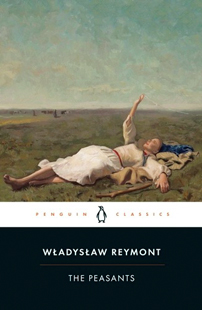 |
Wladyslaw Reymont, The Peasants (Chlopi)
. . . everyone had a bit o’ land to work, and meadows, pasture . . . Or did anyone need to buy wood? He went off to the forest and took as much as were needed. (Reymont 2022, p. 168)
Jesus, that cottage were cold as ice . . . The windows were stuffed with straw . . . one bed in the house, and the rest huddling like dogs in a heap o’ bedding . . . The girl weren’t dead, but it were the hunger . . . no potatoes left, quilt sold already . . . Every quart o’ groats they must beg from the miller – no one wants to give credit or lend till harvest. (Reymont 2022, p. 469)
. . . the hired hands huddled in a separate group like partridges, not daring to push forward under the eyes of the priest . . . only the Lipce hired hands were left before the church, waiting in vain for someone to fall to their lot. (Reymont 2022, p. 548)
Introduction
Wladyslaw Reymont was the remarkable winner of the Nobel Prize for Literature in 1924 – remarkable both because of his near-peasant background and, apprenticed as he was to a tailor at the age of 13, limited education, and because he won in competition with such internationally celebrated authors as Thomas Mann, Thomas Hardy, and George Bernard Shaw.1 Such fame as he won was short-lived, however, and his work is hardly known outside Poland, where he has continued to be read and is still regarded as a major novelist, “a Polish master stylist” (Paloff 2023, p. 5). Reymont’s prize was also unusual in that it was awarded not for the corpus of his work but, as the citation of the Chair of the Nobel Committee explains, specifically for The Peasants. The citation concludes:
. . . this epic novel is characterised by an art so grand, so sure, so powerful that we may predict a lasting value and rank for it, not only within Polish literature . . .2
The fact that the novel has not been widely known outside Poland may now change, however, with the availability of a fine new English translation by Anna Zarenko (the language of the earlier translation was such as to have made the novel almost unreadable).3
The Peasants is a huge novel with Zarenko’s translation running to 893 pages. But a patient reader may be drawn in quickly, as I have been, by the immersion in the life of a Polish village in the late nineteenth century that the book offers. It is written in four parts named after the four seasons, starting with Autumn and ending with Summer. Nature, landscape, and the changing weather through the seasons are richly described, and are treated both realistically and symbolically. The novel has a rich cast of characters and many pages are devoted to their conversations, now translated – in the judgement of Hugh Welchman and his Polish associates – in such a way as to capture something of the voice, the humour, and the imagination of the village people.4 Some readers may find that the use of a kind of “rustic” English in the translation of speech grates a little.
“In many ways,” as Czaykowski says, “the main character of the book is the village itself.”5 Reymont often writes about the mood in the village and he treats it as a definite entity. It is a community, though one in which there is marked social differentiation, and one, as is usual, with many conflicts and jealousies. The book can be characterised as a chronicle of the life of a Polish village – named Lipce6 – over a year, and as one reviewer has said, “What happens in The Peasants is as unremarkably real as Lipce itself” (Paloff 2023, p. 5). This comment hardly does justice to the extraordinary drama in the lives of the central characters of the novel, in the family of the foremost farmer of the village, the rich peasant Maciej Boryna. But it aptly draws attention to the fact that much that goes on in the text has nothing directly to do with this narrative. The recently widowed Boryna is at odds with his son Antek over land and Antek’s inheritance, and, as it turns out, because he takes as his new wife (partly to ensure that he maintains his position as the head of household) the beautiful Jagna, with whom Antek is infatuated. The two men fight, and Antek and his wife Hanka and their children are thrown out of the house. Hanka, in her struggle to hold her family together, emerges in some sense as the real heroine of the novel. The story of the tensions between these four characters becomes interwoven with that of the relations of the villagers with the “squire,” the old landlord, in the context of the struggles that followed from the emancipation of the serfs in Poland in the mid-nineteenth century, partly over rights to the commons. The first epigraph to this essay refers to a view of the past from before emancipation that is deeply held in the village. The story of the Borynas reaches a climax at the end of the Winter volume; the second half of the book, on what happens in Spring and Summer – though it continues to trace the lives of Maciej (whose death at last comes at the beginning of Summer), of Antek, Hanka, and Jagna – tells the story of Jagna’s passionate adoration of the village organist’s son Jasio, and ends with her being cast out brutally from the village – is as much or more concerned with the village and its relations with the gentry and the state.
A Realist Portrayal?
Reymont acknowledged the influence of Zola’s La Terre,7 even though he was critical of the French writer’s representation of the peasantry, and both writers are identified as literary realists. They are among a number of writers from Belgium, Denmark, England, Germany, Norway, and Russia, as well as France and Poland, who are the subject of an essay by the historian Jerome Blum on realist novels as a historical source for the European peasantry (Blum 1982).
Among these writers, Zola was an observer of peasant life from the outside. He spent some weeks in the Beauce, the region of France where his novel is set, more or less as an ethnographic researcher, before he started writing. Reymont, however, wrote from his own experience of village life, growing up as the son of a village organist in a village like Lipce. Zola focuses on the tensions between generations and within families over land, and in his account of peasant life there is little space for tenderness or real affection in the relationships between people. La Terre was criticised for its representation of the lives of peasants as sordid and brutal. Blum says that this was true of other realist novels about rural society as well (Blum 1982, p. 130). Conflict within families over land is also an important theme in The Peasants. The drama of the first half of the novel, in the volumes on Autumn and Winter, concerns the conflict between Maciej Boryna and his son Antek over land and the beautiful Jagna. The conflict leads the two men to fight each other almost to their deaths. There is as much cruelty and violence in Reymont’s novel as in Zola’s – Jagna’s brother Szymek and their mother also fight each other close to death; the elected village administrator, the Voyt, and his wife brutally beat up the Koziols, who are labourers. The thrice-widowed, fearsome village gossip Jagustynka says, “hand over what you’ve got to your children and see what you get in return: just enough for a rope or a stone round your neck” (Reymont 2022, p. 11). She reckons that Boryna is sensible to marry again:
Or the kids’d see to his old age as mine did for me! A whole ten morgen8 of the best land I gave ’em, pure gold, and what? She spat in anger. I’m forced out to earn, to being a servant! Somebody’s hired hand . . . (Reymont 2022, p. 113)
Other characters in the novel as well as Jagustynka have suffered in this way at the hands of their children. A fate like that of Shakespeare’s King Lear, shared by Old Fouan in La Terre, was not uncommon in Lipce.
Blum writes of “[t]he realists’ dark picture of rural life” (Blum 1982, p. 130). He refers to the portrayal in their novels of the tensions, quarrelling, and even hatred within families, exactly as in The Peasants; to the heavy drinking through which many, not only men, seek escape; and to the desolate lives of farm labourers in particular. The passages that appear as the second and third epigraphs of this essay reflect Reymont’s description of the hard lives of the “hired hands” of Lipce, who must also “know their place” and not be surprised if they are overlooked by the priest. Boryna chastises his trusty servant Kuba, who had pushed himself forward among his “betters,” at the mass:
the reverend teaches that elders are to be respected. Drink on it, Kuba, and listen to what I say, and you’ll mark yourself that a farmhand is not a farmer . . . Each has his own different place and to each the Lord Jesus has allotted it. The Lord has allotted yours too, so mind it and do not cross the line . . . don’t raise yourself above the rest – for you’ll be sinning gravely. (Reymont 2022, p. 67)
On another occasion, Boryna shows himself to be quite insensitive to the suffering that poverty brings to some of his neighbours:
Just try carrying water in a sieve and you’ll see how much you fetch – that’s how it is with poverty. That’s how God has ordered it, it seems to me, and how it will stay, that one man has enough, and another catches the wind. (ibid., p. 292).
Here, in nineteenth-century Poland, Catholicism justifies and legitimates the social order that depends on access to land – in the way that Brahmanical Hinduism has done historically in Indian rural society.
There is “darkness,” no doubt, in The Peasants, but Reymont’s study is more sympathetic and more nuanced than others of the realist novels. In them, exactly as in Zola’s La Terre, “Expressions of love and sacrifice for a kinsman occur rarely” (Blum 1982, p. 131). In Reymont’s Lipce, however, such expressions do occur, and his novel seems, in consequence, a more convincing account of rural life. The soldier Jasiek surprises his neighbours by his kindness to his wife Tereska when he comes to know that she had been carrying on an affair while he was away.
The society of the village of Lipce may be riven by conflict and jealousy, but its people are also capable of generosity towards others, as many are, after disaster befalls Hanka’s paternal family following a storm, or when Szymek works hard, after being disowned by his mother, to create a home and a farm for his new wife Nastusia. When most of the men of Lipce are imprisoned and their fields threaten to remain uncultivated, people from the neighbouring villages come to help: “Wise and amicable neighbours,” one says, “are like fences and defensive walls” (Reymont 2022, p. 551). And whereas Zola seems to reflect Marx’s famous view of the peasantry (in The 18th Brumaire of Louis Napoleon) as being like potatoes in a sack, never coming together in collective action, the men of Lipce do come together – not without success – to struggle against the loss of what they believe to be their forest, and then against German settlers. There is solidarity, cooperation, as well as conflict among them.
Jerome Blum says of the realist novels:
Perhaps the most striking generality about the peasantry as a type that emerges [from them], defines the peasants as a different and inferior order of humankind . . . [with] a different ordering of values and a different morality . . . They were alien beings. (Blum 1982, p. 128)
This corresponds closely with what the historian Eugen Weber tells us in his classic Peasants into Frenchmen, about the way the French peasantry was perceived by urban elites in the late nineteenth century (Weber 1976); and one exemplar of the novels Blum discusses is Zola’s La Terre.
Reymont, however, perhaps because he writes as someone from a peasant background, offers a more sympathetic portrayal. The people of Lipce do not seem at all like alien beings, even if the way of life of the village community and the values and the morality that underlie it are different from those of the urban middle class. The “proper order” of the village, on which Antek reflects as he struggles to find a way forward for himself (Reymont 2022, p. 758), is one of hierarchy and of patriarchy, much like wider society. The threat that is brought to this order by Jagna’s family, which is headed by her mother Dominikowa who dominates her sons Szymek and Jedrzych (she makes them do “women’s work”), as well as by Jagna’s sensuality and her disruption of moral and social codes,9 are at the root of the drama that eventually leads to her cruel expulsion from the village.10 There is a conflict of values in village society, and the individualism that Jagna expresses – as does Antek’s sometime enemy, sometime friend, the oddball Mateusz11 – has to be curbed.
But the conflict between individualism and conformity, and the gender struggle that is very well captured in the novel, hardly make the people of Lipce appear as an “inferior order of mankind” (Blum 1982, p. 128). This, though, is how they are regarded by the gentry. In a chance meeting with the squire after he has participated forcefully in a public meeting about setting up a school, Antek refers to the responsibility of the gentry for social ills:
[I]n Polish times their only care for the people was to drive them to labour at the end of a whip and oppress them, while they partied until they’d partied the whole nation away. Now everything has to begin again, anew. (Reymont 2022, p. 831)
This is met by the squire with the angry response, “Keep your nose out of gentlemen’s business, you peasant lout, and stick to dung and pitchforks, understand!” (ibid.).
The Context: The Emancipation of the Polish Peasantry
In Germany, or Russia, Jerome Blum argues, “the villain who destroyed the old ways was not so much industrialisation or capitalism as it was the emancipation of the peasantry” (Blum 1982, p. 138). In the period of which Reymont writes in The Peasants, Poland was partitioned, as it had been since 1797 (and would be till 1918), between the Austrian, Prussian, and Russian empires, and the area in which Lipce lay was part of Russia. Blum’s argument applies very well to what we see happening in the village through the pages of the novel.
As Koziolek explains,12 the nobility and the gentry of Poland (the Szlachta) had enjoyed exclusive rights, including the right to own and inherit land and judicial power over peasants, as well as political rights and privileges. Peasants then, along with the land, had belonged to the landowners, for whom they were obliged to work without pay for a certain number of days in the week. Through the first half of the nineteenth century, however, under the three empires, though at different rates and in different ways in the three divisions of partitioned Poland, the elimination of the Szlachta was achieved – as the historian Norman Davies explains – by the progressive annulment of their legal privileges (Davies 1981, p. 182). In Russian Poland, active measures were taken to repress an estate seen as resolutely hostile to the Tsarist order, Russian Poland having played a leading role in insurrections against Russian rule – of which the longest-running insurrection was the January Uprising of 1863–64 (the earlier ones were in 1794 and 1830–31).
At several points in his novel, Reymont refers to the January insurrection. Pan Jacek, the eccentric younger brother of the squire, says of Maciej Boryna, “He was a good man and a true Pole. He was with us at the uprising” (Reymont 2022, p. 688); and we learn on All Souls’ Day (in the Autumn volume), from Maciej’s man Kuba, that there is a row of unmarked graves in an obscure part of the village cemetery of those who died in the insurrection, including his own mother. And, Kuba says, “I saw more than one Russki off” (ibid., p. 130). It was after the January Uprising that Tsar Alexander II finally completed the emancipation of Polish peasants from serfdom, and Davies reports that “it was the numerous petty nobility [like the squire of Lipce] which suffered most acutely” (Davies 1981, p. 182). By 1864, he tells us, at least 80 per cent of the Szlachta had effectively been removed, many members of this old dominant class sinking without a trace into the peasantry or the emergent working class (ibid.).
We should not conclude, however, that the emancipation brought a thoroughgoing land reform. According to Davies’ data, somewhat less than 50 per cent of the farmland passed into peasant hands. Only the wealthier people of a village (those who were to become the “farmers” of a village like Lipce) benefited directly. And,
if over the next thirty years, some peasants were able to increase their holdings, purchasing lands from their indigent neighbours, both gentlemen and peasants, others could not prosper. The numbers of landless quadrupled. (Ibid., p. 188)
Now the remaining landowners, as well as rich peasant farmers such as Boryna, had to buy in labour. But wages were very low and survival for the landless was extremely difficult, as Reymont writes. The peasantry, then, was differentiated, and capitalist relations of production had started to develop: “The material condition of the peasantry did not improve dramatically. Freedom did not necessarily engender prosperity” (ibid.).
In this process,
Many villages lost all right to graze their cattle in the manorial pasture, or to cut timber in the manorial forest. Their chances of prosecuting their squire in court were slim. Friction, disputes, and chicanery persisted. (Ibid.)
This sums up what happens in The Peasants. At the very beginning of the novel, Maciej Boryna loses a cow when the squire’s men chase his boy Witek and the animal out of the manor copse: “Damn the beggars,” Boryna exclaims. “That pasturage is ours, set down in the register clear as day, and they’re forever seeing us off and claiming it’s theirs” (Reymont 2022, p. 15). He brings a case against the squire over the cow, but loses it. Meanwhile his trusted man Kuba ends up losing his life because he gets shot while “sharing hares with the squire.” All the game birds and animals (like the hare) are the property of the squire, but though poaching is reckoned a serious offence, the possibilities for eking out a meagre income by selling partridges (as Kuba has done), or hare, or deer, are great enough to encourage a man like him to risk it. We learn, too, that the squire has sold an area of woodland: “That scoundrel, the dog! Sold! Sold our wood,” Boryna yells, and then, thumping the table, “we won’t let them take it, as God’s in heaven we will not” (ibid., p. 122).
Thus begins the drama with which the struggle involving Boryna and Antek over land and Jagna is interwoven, and that reaches a climax at the end of Winter. It emerges that the squire is going to sell in order to pay off debts that he owes to Jewish moneylenders, and because of the opposition that he meets in Lipce, the squire will only employ men from other villages. Boryna is called upon, as the richest peasant of the village and a physically powerful man, to lead the struggle against the squire, but he is offered the chance by the Voyt, the miller, and the blacksmith (who is his son-in-law) to join in the scam that they have quietly set up, to profit from the squire’s actions by carting the lumber that is cut (the kind of chicanery, perhaps, that Davies refers to). But when at last the felling begins, Boryna does lead the men of Lipce against the squire. In Reymont’s account of it, a truly Homeric struggle ensues in which Boryna is finally badly beaten by the squire’s forester (sustaining injuries from which he eventually dies), who is then killed by Antek – father and son are at last reconciled.
The story of the struggle over land and forest does not end there; it continues through Spring and Summer. The action that the men of Lipce took over the forest is successful, though they have paid for it through their imprisonment (“There was not a whisper of a man anywhere” in springtime; Reymont 2022, p. 423). But then there are reports that Germans are coming in to settle on land that they have purchased from the squire: “They were saying back at Easter that the squire were looking for buyers,” “But God save us from German neighbours” (ibid., p. 582). And “the village seethes like a pot on the boil” (ibid., p. 608). The men, now released from prison, mobilise against the Germans, even against the opposition of their own womenfolk – and again they are successful. This action leads the squire to make peace with the village. “I prefer to sell to my own, even at half the price” (ibid., p. 709) – and though the villagers are not taken in by this sudden change of heart and reckon that the squire now needs their help against the Jewish moneylenders, this is what then happens. The villagers find the means of acquiring plots of land, paying by instalment (ibid., p.720). Their dealing is greeted with protest by Kobus on behalf of his fellow hired hands of the village: “We’re owed land too. We’ll not settle for this! It’s got to be fair. . . . There’s got to be equal land for all.” But Kobus is thrown out of the inn for his pains and left to shout forlornly outside (ibid., p. 723).
Peasants into Poles?
The title here mimics that of Eugen Weber’s study of the French peasantry, Peasants into Frenchmen (Weber 1976). In 1870, Weber argues, France was not yet a nation, being neither materially nor morally integrated, and peasants were treated by the elites of the cities and towns with condescension, regarded as little more than working animals, and treated by the state as a colonised people, in a way that was comparable with its treatment of the people of Algeria. Over the next three or four decades, all this changed. Popular and elite ways of thinking came closer together to see the creation of a nation as a result of people sharing experiences with each other, through the greater possibilities and frequency of travel, changes in occupations, and the development of a capitalist economy – and perhaps especially through education. Weber emphasises the importance of education in “the passage from relative isolation and a relatively closed economy to union with the outside world”13 – and in the building of a nation. Are there any indications of such changes taking place in rural Poland in the late nineteenth century, as reflected in The Peasants?
The way in which Lipce is represented does not suggest that it was quite as isolated – “separated from the wider world” – as Koziolek suggests in his Introduction to the new translation of The Peasants. After all, there were people in the village who had been involved in the January Uprising, as Maciej was, and some others like Kuba who had been compelled to fight with the master of the manor where his family had then worked. The Uprising, led by the Szlachta, was not supported by very many from among the peasantry, while some even took the Russian side (see note 2 to chapter 10 in the Spring volume of The Peasants; Reymont 2022, p. 926). Old Pryczek questions the wisdom of relying on the gentry:
[L]et me tell you how it was in the years when the gentry revolted . . . they bamboozled and swore that when there were a Poland, they’d give us freedom, and land and forests, and everything! They promised, they talked, but it were another who gave what we have now [he is referring to the Tsar, who carried through emancipation from serfdom] . . . You listen to the gentry if you’re stupid, but . . . I know what that Poland of theirs means: nothing but serfdom, oppression and a whip at your back. (Ibid., p. 816).
With this speech, Reymont sums up the dilemma of Polish nationalism for the peasantry. But if he is fairly reflecting the kind of discussion that took place in villages like Lipce, then it suggests a strong awareness among some in the village, at least, of the wider world, and of the possibility of their country becoming an independent nation – even if for others the world outside still remained “closed, threatening, incomprehensible” (ibid., p. xii).
Reymont represents villagers as having a sense of being Poles, in opposition both to Russians and to Germans. In summertime, Antek is awakened from a doze by the squire passing by on his horse – the event that I referred to earlier. During their conversation, the squire expresses surprise that Antek can have dared to raise the question of a Polish school with the local administration, which is ultimately in Russian hands: “But how did it enter your head to ask for a Polish school?” he asks. “How indeed!” Antek replies, “Why, we’re Poles, not Germans or some other sort” (ibid., p. 830). The conversation takes place in the context of a struggle in the village over the proposal from the administration for setting up a school in Lipce, but one in which the teaching will be in Russian (as was ordained by the Tsar in 1872). At an angry meeting with the prefect, the head of the local administration, people exclaimed, “Every creature has its own tongue, but only we are ordered to use another’s” (ibid., p. 822). Antek had spoken up forcefully on the occasion, until threatened with arrest. In the end, the vote on the school is apparently rigged in favour of the Russian school, but the opposition to it suggests that the peasants are on the way to becoming Poles.
Opposition to the official proposals about the school is whipped up by Grzela Rakoski, the brother of the Voyt, who is said to get about “and read the Zorza,” (ibid., p. 303) which was a popular socio-educational weekly for the villages, established in 1866 (ibid., p. 918). Awareness of the politics of the wider world is encouraged, too, by a visitor to the village who comes to stay with the Borynas, called Rocho, of whom it is said, “maybe he’s a beggar, or maybe not . . . but he’s a pious man and good” (ibid., p. 100). He is reputed to have visited the Holy Land; he knows languages – able to speak German, for instance, to those who try to settle on local land; he is a storyteller and a preacher (there is a suggestion that he may be associated with the Brothers of the Sacred Heart);14 and he teaches children in Polish. The knowledge that “Rocho were teaching the children and handing out Polish books and newspapers to the people” (ibid., p. 655) had reached the local gendarmerie. Eventually, the gendarmes having come to arrest him, he flees the village, being hunted, as he says, “For wanting truth and justice for the people” – though quite what his objectives are remains unclear. Reymont seems to have used the character of an outsider to the village as a vehicle for showing that the village was influenced by ideas from the world outside.
Conclusion
Whether The Peasants merits the kind of commendation that the Nobel Committee offered in 1924 is not a matter for this essay, though I note its enduring importance in Polish literature. I think that very few, if indeed any other, novels present such a rich portrayal of a peasant society at a particular historical moment as does The Peasants. Koziolek, in his Introduction, argues that “Reymont’s narrative project is deeply conservative and seeks to lock the peasant community in a state of homeostasis,” and that “it tells the tale of the failed inception of a new political class in Poland – the peasants” (Reymont 2022, pp. xiii, xii). I find this a surprising judgement. Even if, as Koziolek explains, Reymont maintained close links with a right-wing party, National Democracy, his novel seems to me to represent a society that is in the midst of epochal change – rather than experiencing “homeostasis” – as a consequence of emancipation from serfdom, the decline of the Szlachta, the gentry, and the beginnings of the development of capitalism in the rural economy, as well as of the stirrings of national consciousness reflected in debates over the language of instruction. No matter what Reymont may have intended, the possibility of the development of a political class or even of classes among the peasantry is certainly represented, and it is clearly far too soon to conclude with any certainty what will happen. It is a story of rural society in the process of change.
Acknowledgements: I am grateful to Professor Yael Schlick of Queen’s University, Kingston, for her helpful comments on a draft of this paper.
Notes
2 These remarks are based on an essay by the late Polish-Canadian writer, Bogdan Czaykowski, for Nobel Prize Laureates in Literature, Part 4.

3 The historian Patrick Joyce, for instance, writes in his book, Remembering Peasants, that he found the earlier (1924) English translation of Reymont’s novel “so dated as to be unreadable” (Joyce 2024, p. 345); see the article about Joyce’s book in Review of Agrarian Studies, vol. 14, no. 2, 2024.
4 Comments from Welchman’s “Foreword” to the Penguin Classics edition. Welchman is the maker of the painted animation historical drama film based on the book released in 2023.
5 Bogdan Czaykowski, in Nobel Prize Laureates in Literature, Part 4 (page numbers are not available in the online edition).
6 The Polish writer Franciszek Ziejka, in his introduction to a Polish edition of Chlopi, says that the book is “a tale of every village” (cited in the “Introduction to” The Peasants: Reymont 2022, p. xii).
7 La Terre is the subject of an essay published in Review of Agrarian Studies, vol. 9, no. 2, 2019.
8 A morgen is a unit of land equivalent to about half a hectare.
9 I have taken this formulation from Ryszard Koziolek’s “Introduction” to the new English translation of The Peasants; Reymont (2022), p. xxii.
10 In the way in which it depicts gender relations, The Peasants richly bears out Patrick Joyce’s argument in his book, Remembering Peasants, that male dominance was much more fragile in peasant societies than has been commonly thought (Joyce 2024).
11 Mateusz consistently resists pressures to marry and start a family, and he is described several times as feeling constrained by the village and as seeking wider horizons: “how narrow and stifling this world is” (Reymont 2022, p. 807).
12 In his “Introduction” to the new English translation of The Peasants (Reymont 2022).
13 This quotes from the account given of Weber’s argument in Review of Agrarian Studies, vol. 9, no. 2, 2019.
14 Brothers of the Sacred Heart is a Catholic lay religious community, partly inspired by the Jesuits – then banned in Poland – and dedicated to the education of youth. Rocho is said to spend “whole days wandering the neighbourhood with his books, teaching the pious services to the Heart of Jesus that they’d banned from holding in the church.” Also see note 7 to the “Summer” volume of The Peasants, chapter 5; Reymont 2022, p. 928.
References
| Blum, Jerome (1982), “Fiction and the European Peasantry: Realist Novels as a Historical Source,” Proceedings of the American Philosophical Society, vol. 126, no. 2, pp. 122–39.
| |
| Davies, Norman (1981), God’s Playground: A History of Poland, Volume II: 1795 to the Present, Oxford University Press, Oxford.
| |
| Joyce, Patrick (2024), Remembering Peasants: A Personal History of a Vanished World, Scribner, New York.
| |
| Nobel Prize Laureates in Literature, Part 4 (2007), Gale, Detroit.
| |
| Paloff, Benjamin (2023), “Flow of Colours,” Times Literary Supplement, May 5.
| |
| Reymont, Wladyslaw (2022), The Peasants, translated by Anna Zarenko, Penguin Classics, Penguin Random House UK; first published in Polish as Chlopi in four volumes, 1904–09.
| |
| Weber, Eugen (1976), Peasants into Frenchmen: The Modernization of Rural France, 1870–1914, Stanford University Press, Stanford.
|